


Data-driven attribution vs B2B attribution
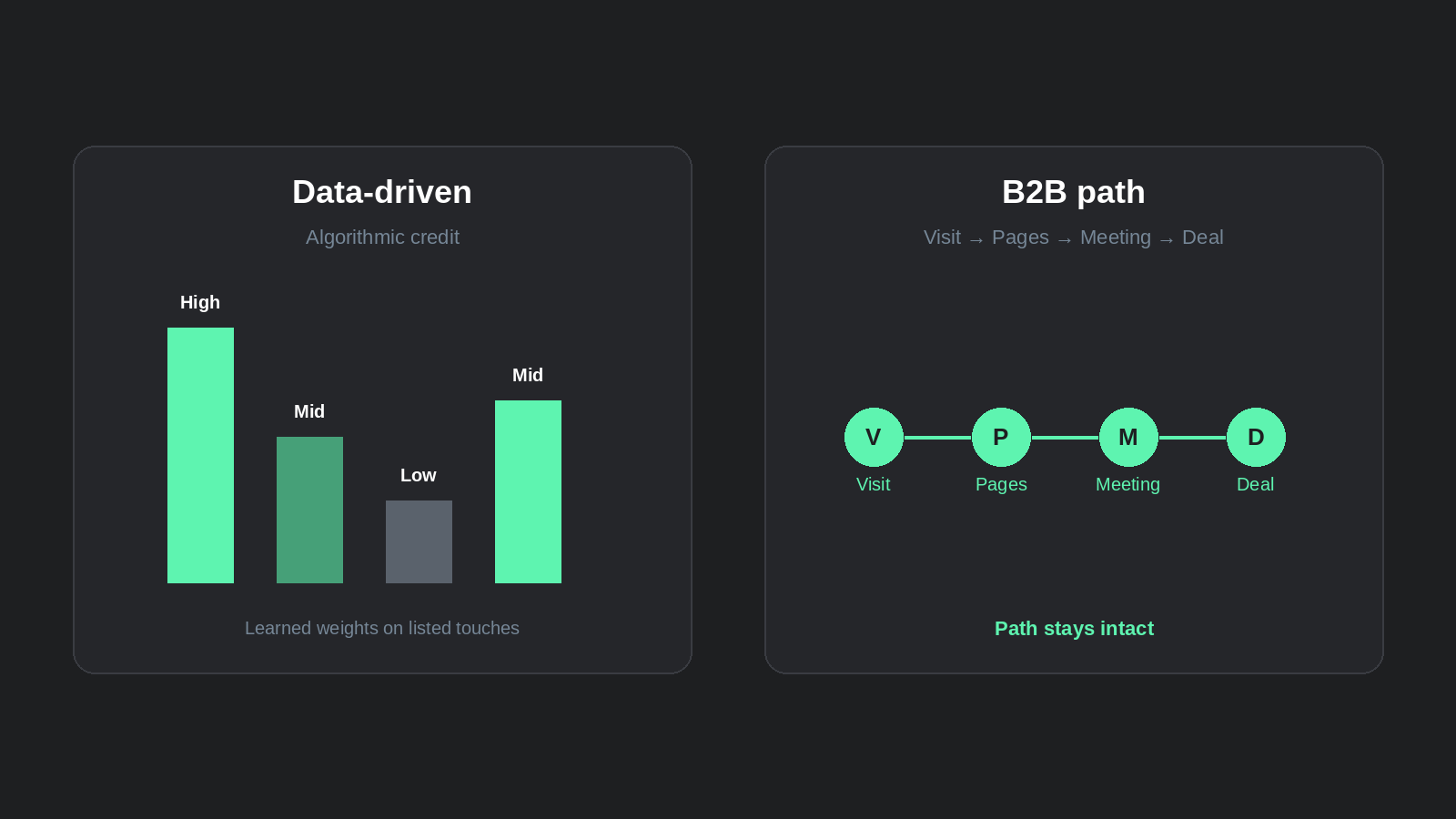
Data-driven attribution assigns credit with an algorithm or machine learning model across the touches it can see. B2B attribution keeps Visit, Pages, Meeting, and Deal on one path so CAC and channel quality stay honest. That is the real split when teams ask about data-driven attribution vs B2B attribution.
Algorithmic credit sounds more sophisticated than fixed rules like first-touch or last-click. The model still answers a different question than revenue path. Extra weight on a high-probability touch does not tell you whether the Meeting was on the path, whether a later Direct or LLM return mattered, or which spend closed revenue.
We already covered linear attribution vs B2B attribution and GA4 vs B2B attribution. Data-driven sits next to those rule models: every listed touch can get a share, with weights learned from conversion patterns instead of fixed percentages. B2B attribution still has to keep the path intact.
What does data-driven attribution actually credit?
Data-driven attribution takes the tracked touches in a lookback window and assigns fractional credit based on how those touches relate to conversions in the training set. Platforms such as Google Analytics and paid media stacks ship data-driven or algorithmic models so marketing can move past equal-split multi-touch without picking first-touch or last-click by hand.
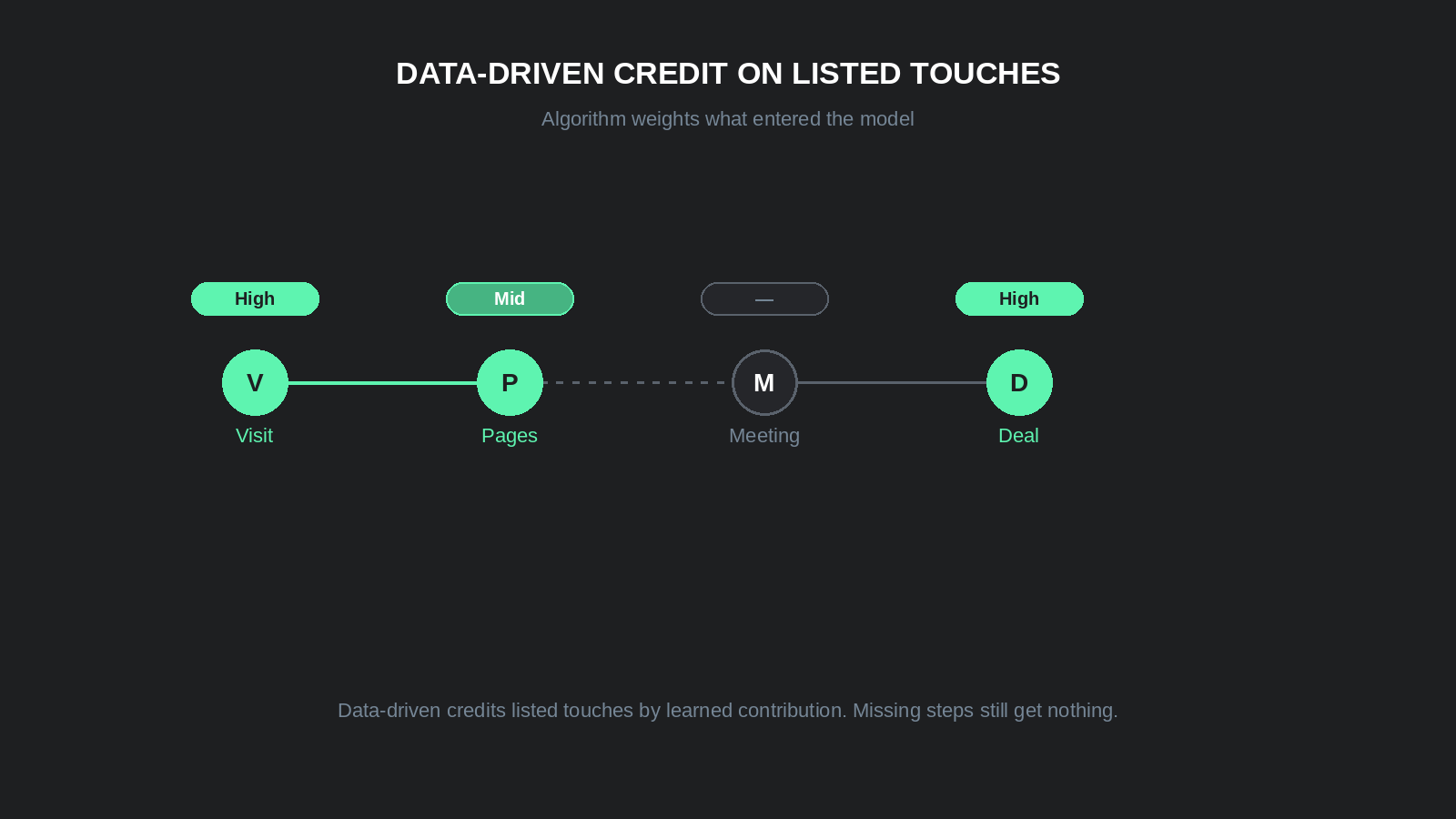
The model is easy to defend when you have enough conversion volume and a clean touch table. It still depends on which events entered that table. If offline Meetings, calendar bookers, or later Direct and LLM Visits never join the touch list, they get 0% even though the algorithm claims to learn what drives outcomes.
So a data-driven report can look precise while the path that closed the deal is still incomplete.
What does B2B attribution have to keep on the path?
B2B attribution has to keep the journey together. A Visit lands from ads, search, a partner, or elsewhere. Pages get read. A Meeting gets booked. A Deal moves in the CRM. Later returns can show up as Direct or as traffic from ChatGPT, Claude, Perplexity, or Gemini.
Algorithmic weighting can sit on top of that path when you want a multi-touch view that privileges high-contribution touches. It cannot replace the path. Multi-touch without Visit → Pages → Meeting → Deal still collapses into campaign touch lists. Real CAC needs the Meetings and Deals on the same ledger as the Visits.
Source is built around that path with one pixel and GTM, no warehouse required: Visit → Pages → Meeting → Deal in one place, with chat over the data and daily Slack reports when you want them.
When does data-driven attribution mislead CAC and channel quality?
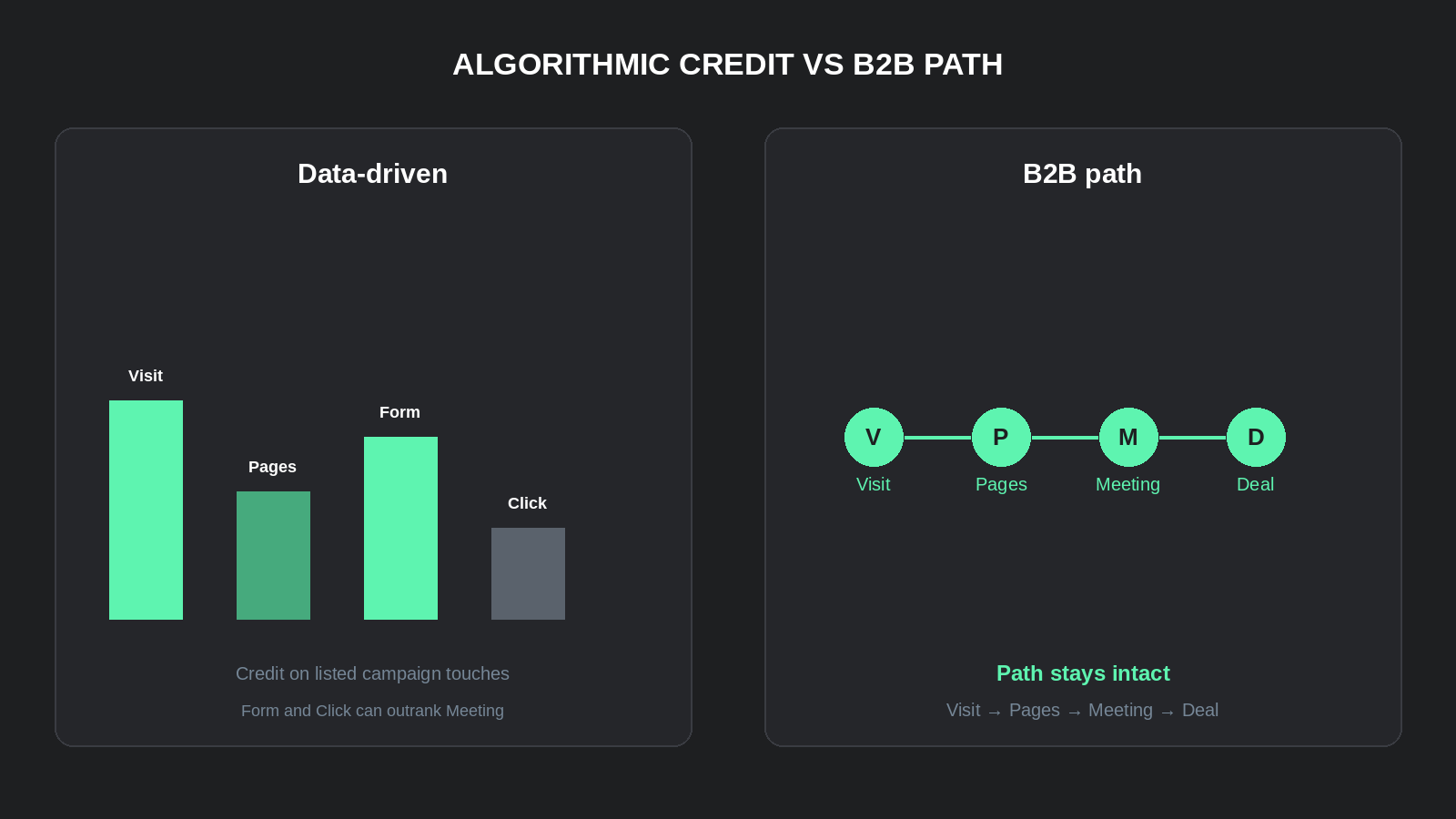
Data-driven misleads when the training conversions are not closed revenue. A form fill or demo request can dominate the model while the Meeting that changed the deal never entered the event stream. A tagged paid click can earn heavy credit while an earlier untagged Visit created the brand memory.
It also misleads when ad platforms run their own data-driven conversions while your site model only sees clicks. The ad platform and the analytics model can both look consistent and still disagree with closed revenue. Teams then argue about model confidence instead of path completeness.
B2B cycles make this worse. Long sales paths accumulate research that the algorithm underweights when volume is thin. LLM and Direct returns get undercounted when they never enter the touch table cleanly. CAC then looks tighter on algorithmic bars than the full Visit → Pages → Meeting → Deal ledger supports.
How should teams use data-driven without treating it as the revenue ledger?
Keep data-driven as a diagnostic multi-touch view. It is useful for asking which listed touches show up around conversions the model was trained on. It is a weak sole answer for which spend drove closed revenue.
Pair it with path-level B2B attribution. Compare algorithmic weighting against the full Visit → Pages → Meeting → Deal chain. Watch for Assisted steps, offline Meetings, and later Direct or LLM Visits. That is how you keep CAC honest without throwing away data-driven insight.
For equal-split multi-touch, see linear attribution vs B2B attribution. For the analytics-suite angle, see GA4 vs B2B attribution. For the top-down spend model next to the same path question, see marketing mix modeling vs B2B attribution. For the wider definition of what has to connect, see what B2B attribution has to connect and multi-touch vs single-touch attribution.
Algorithmic credit is still useful when you want a multi-touch view that learns from conversion patterns instead of fixed percentages. Just do not confuse a data-driven bar chart with a complete Visit → Pages → Meeting → Deal ledger. Path completeness decides whether CAC and channel quality can be trusted.
FAQ
Is data-driven attribution wrong?
No. It is an algorithmic multi-touch model. It becomes wrong when teams use it as the only revenue ledger.
Is data-driven the same as multi-touch?
Data-driven is one way to do multi-touch. Linear, time-decay, position-based, and W-shaped are rule-based multi-touch siblings. Data-driven learns weights instead of fixing them. See also multi-touch vs single-touch attribution.
Does B2B attribution replace data-driven reports?
No. Keep data-driven for learned contribution diagnostics on listed touches. Use B2B attribution for path-to-revenue and CAC questions.
If you want that path in one place, start free at dash.source.app/signup or read more on source.app.