


Single-touch or multi-touch attribution: how to choose
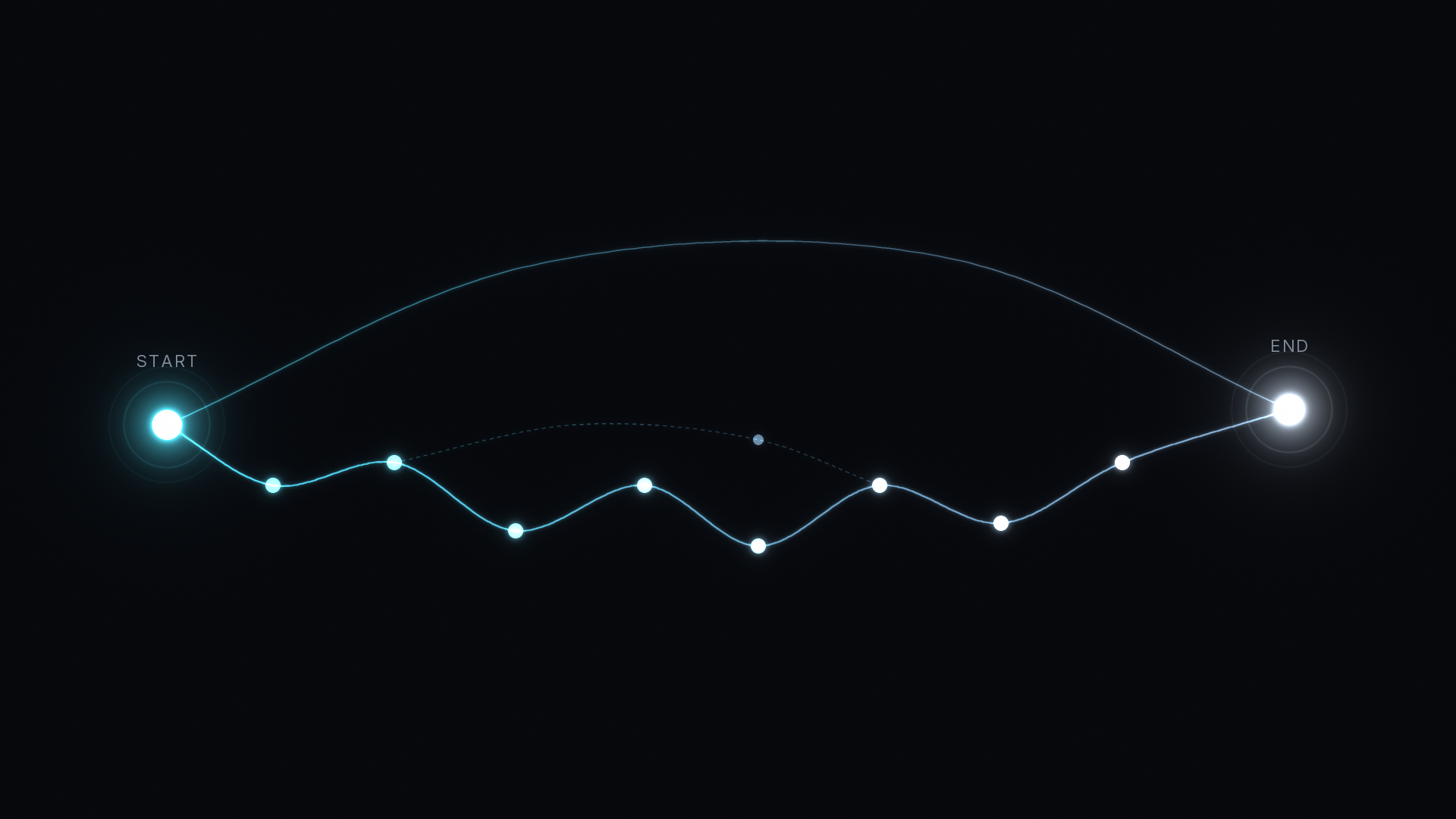
Multi-touch attribution spreads credit across every step on a buyer path. Single-touch attribution gives 100% to one event. Same journey. Two different answers.
Most B2B teams already feel the gap. Marketing wants credit for the early visits. Sales wants credit for the meeting that opened the deal. Finance wants one number that maps to spend. If the visit, the pages, the meeting, and the closed deal never joined, both models will lie with clean math.
We already covered first-touch versus last-touch, what B2B attribution has to connect, and where marketing attribution stops. This piece is the next classic buyer question: multi-touch versus single-touch.
What does single-touch attribution credit?
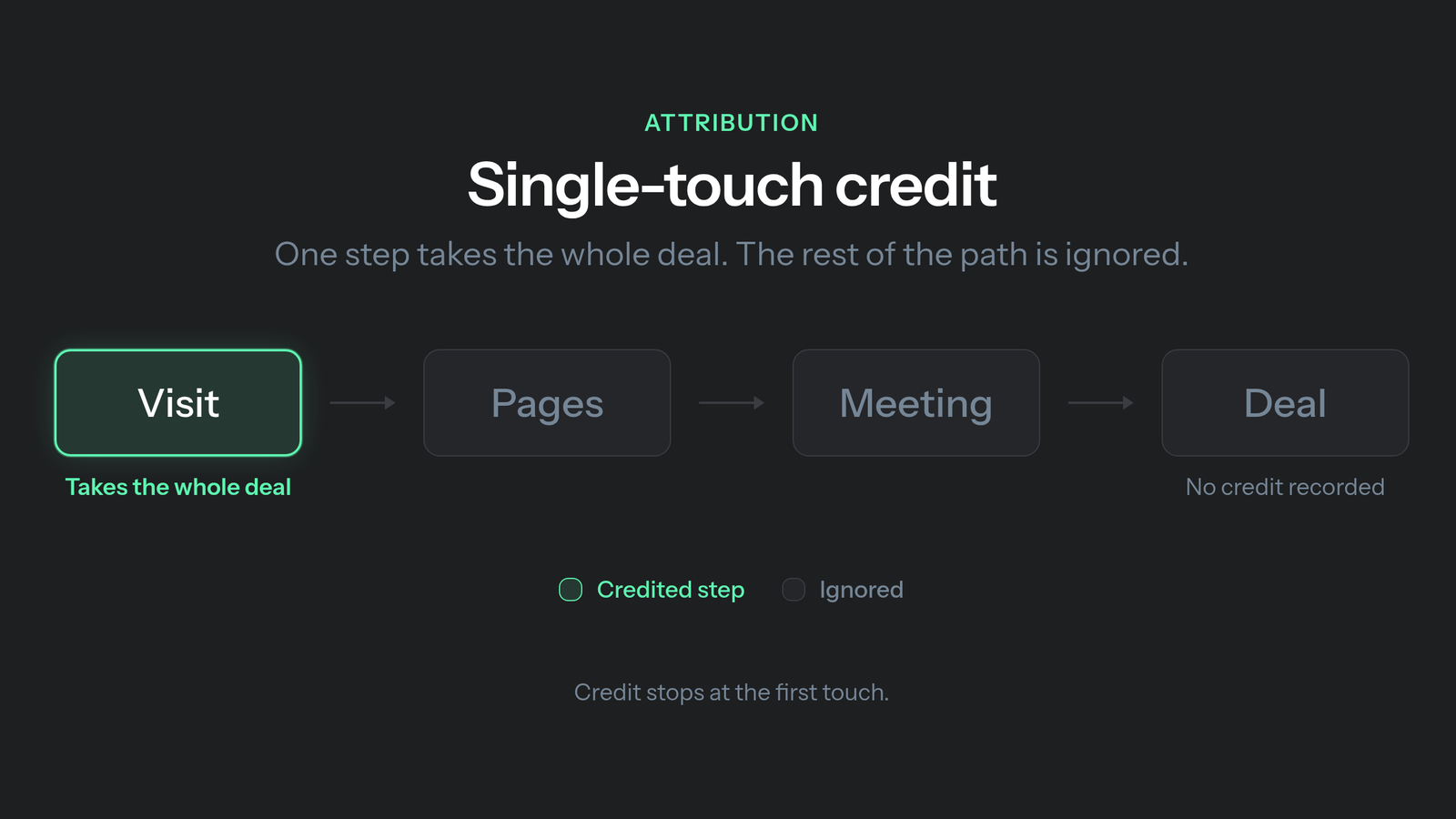
Single-touch picks one event and gives it the whole deal. First-touch and last-touch are both single-touch models. One credits the earliest visit. The other credits the last click or last event before the meeting or the closed deal.
That simplicity is why teams keep it. One row. One owner. One budget line. A paid search click, a form fill, or a CRM source field can become the whole story if that is the only seat you keep.
Single-touch fails when the path is longer than one event. A VP can see an ad, read a comparison post, ask a peer, and book weeks later. If you only keep the booking click, the ad and the post vanish. If you only keep the first visit, the work that finished the deal disappears. The rest of the path still happened. The model just refused to see it.
What does multi-touch attribution credit?
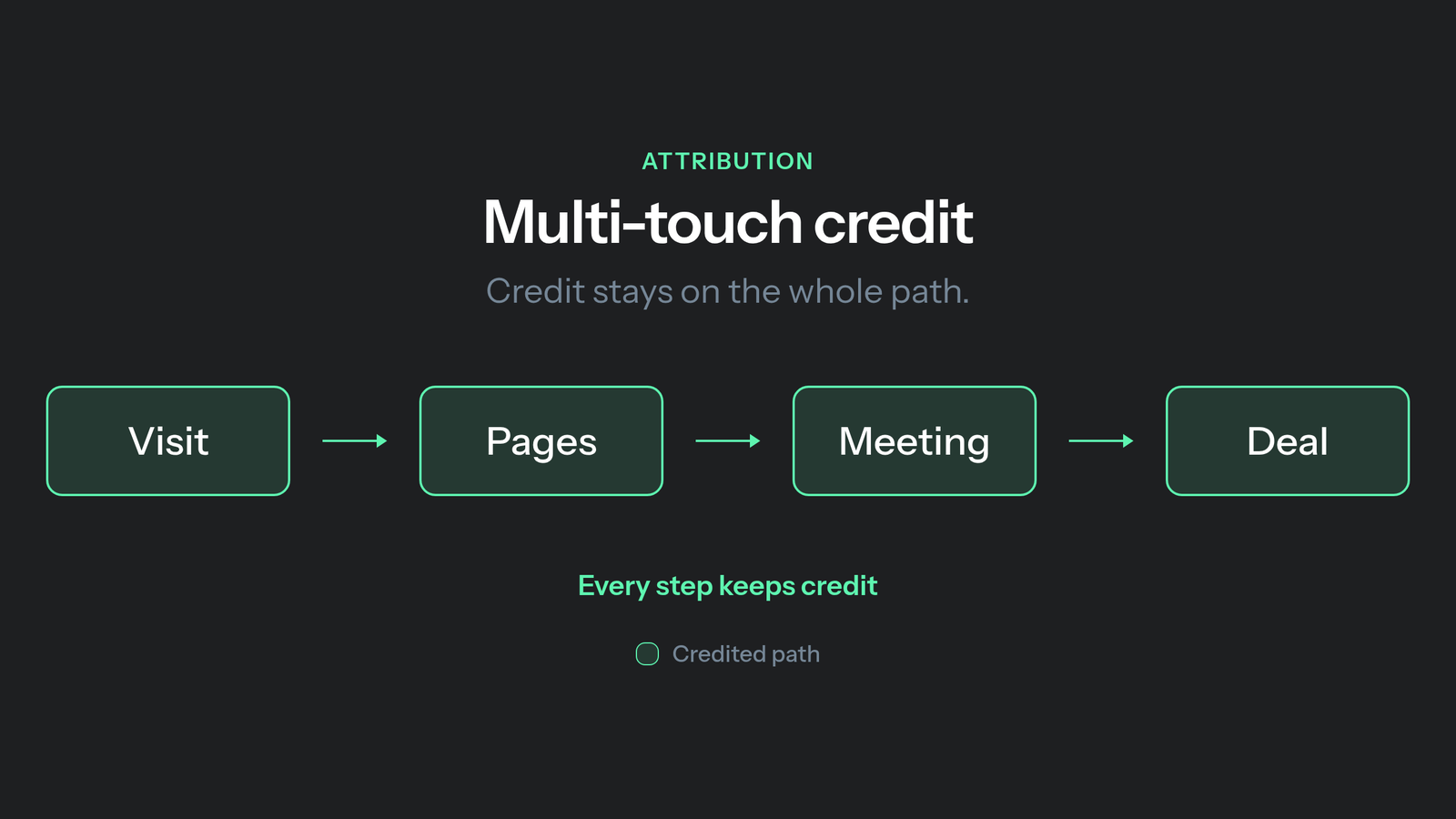
Multi-touch spreads credit across the steps you stored on the same journey. Visit, page views, the meeting, and the closed deal can each keep a share. The exact weights change by model, but the idea does not: more than one event helped.
That is useful when a B2B cycle takes weeks and more than one buyer. The person who first landed is often not the person who booked. The page that moved the account is often not the last click. Multi-touch keeps those middle steps visible instead of treating them as noise.
Multi-touch is not magic. If the meeting never joined the visit, or the deal never joined the meeting, the model is still guessing. Spreading credit across a broken path only spreads the error. We already showed how multi-touch works inside Source once the path exists. The path comes first.
Why do B2B cycles favor multi-touch?
A consumer checkout can finish in the same session as the ad. A B2B deal usually does not. There are more visits, more pages, a calendar booking, and often a call that never fires a pixel. Single-touch compresses all of that into one row. The row looks precise. The story is incomplete.
Time makes it worse. Campaign windows expire. The first visit lives in an old ad report. The meeting lives in this quarter CRM. The closed deal lives in finance. If those systems do not share a journey, the weekly meeting becomes a fight about whose dashboard is right.
Assisted conversions are the honest name for the middle. A channel can help without being first or last. Single-touch hides assists by design. Multi-touch keeps them on the board, which matters when you are cutting spend on anything that does not win last-click.
Where do first-touch, last-touch, and assisted conversions fit?
First-touch and last-touch are single-touch lenses. Assisted conversions are what multi-touch is trying to protect. You can keep all three views on the same path without pretending one of them is the only truth.
Put the path together first. Then first-touch tells you what created the account. Last-touch tells you what closed the form or the call. Multi-touch shows the steps between. Assisted conversions are the middle of that story, not a separate product category.
Google Ads, GA4, HubSpot, and Calendly each see a slice. Ads see the click. Analytics sees the session. The CRM sees the contact and the deal. The calendar sees the meeting. None of them is the full journey unless you stitch them. A ChatGPT citation that starts a path can look like Direct later if you never stored the first visit.
A check you can run this week
Pick five closed-won deals. For each one, list every visit, page, meeting, and CRM step you can find. Mark which event single-touch would keep. Mark which events multi-touch would share. Then ask whether your current report shows the assists, or only the winning seat.
If single-touch and multi-touch disagree, you are looking at two honest models on incomplete data, or on a path that was never stitched. The fix is not picking a louder model. The fix is connecting the visit, the pages, the meeting, and the closed deal.
You do not need a warehouse to close that gap. One pixel on the site, plus the GTM tools you already run, is enough. You can chat with the data, get an AI recommendation, and receive a daily report in Slack.
Source is built that way. Drop in one pixel and it connects across the tools you already use. Multi-touch, view-through, offline activity, and LLM attribution sit on the same path as a real CAC, a goal, and a read on channel quality.
Customer data is not used to train external models. Source is SOC 2 Type II and ISO 27001 certified.
For the equal-credit multi-touch rule next to path-level B2B attribution, see linear attribution vs B2B attribution. For multi-touch as a credit family versus the Visit → Pages → Meeting → Deal ledger, see multi-touch attribution vs B2B attribution.
If you want multi-touch and single-touch on the same visit-to-deal path, start at Source. Attribution is broken. So we rebuilt it.
Install the pixel and connect your first data source in minutes. Start your free trial