


Google Ads attribution vs B2B attribution
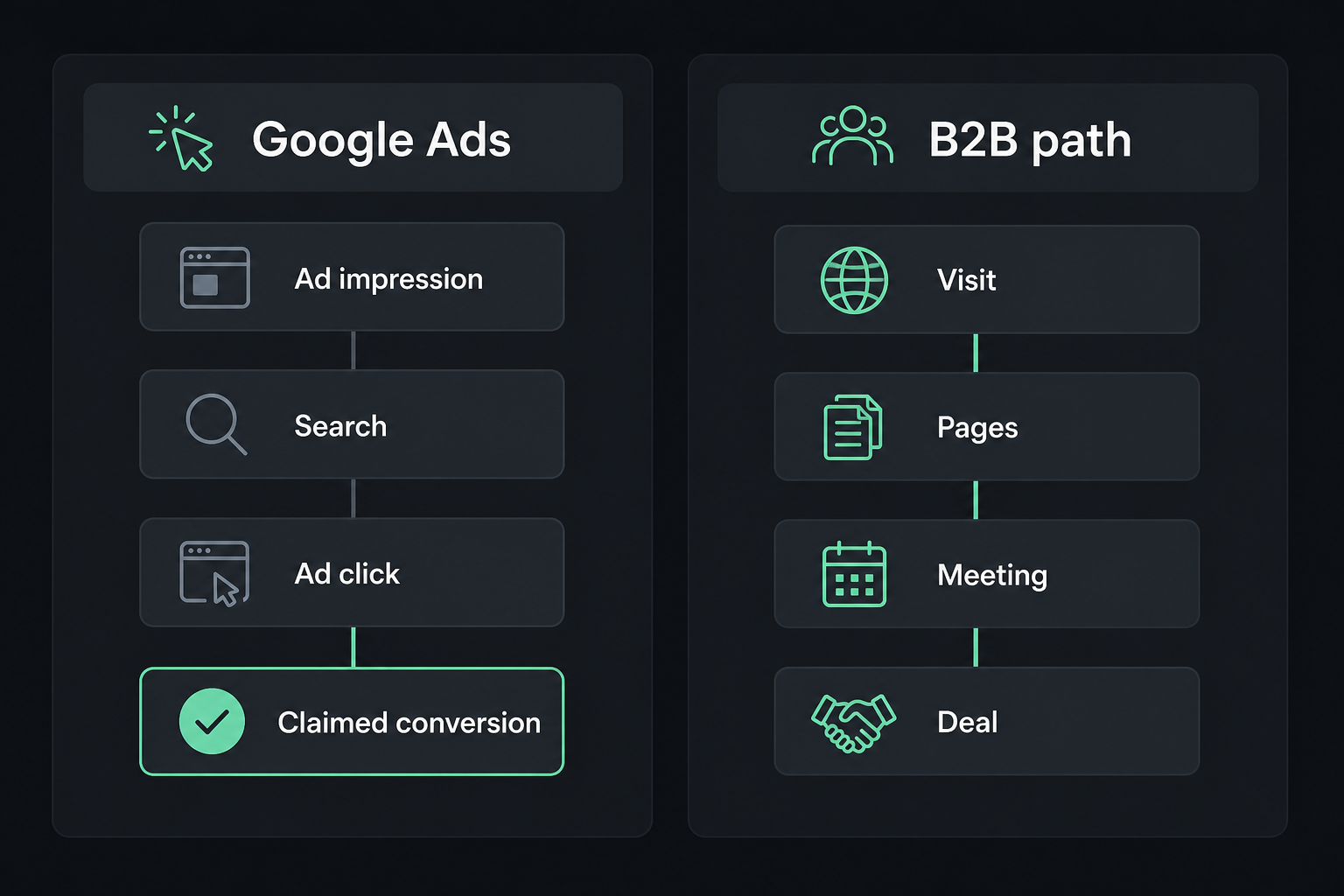
Google Ads attribution credits claimed conversions inside the ad platform. B2B attribution keeps Visit, Pages, Meeting, and Deal on one path so CAC and channel quality stay honest. That is the real split when marketers ask about Google Ads attribution vs B2B attribution.
Google Ads is built to optimize bids and report what the platform can see: impressions, clicks, and the conversions you tell it to count. Those reports matter for media buying. They still stop early. A claimed conversion can be a form fill or a thank-you page. It is not the same as keeping the later meeting and closed deal on the same journey.
We already covered GA4 vs B2B attribution, UTM tracking vs B2B attribution, CRM attribution vs B2B attribution, and LinkedIn Ads attribution vs B2B attribution. This piece sits next to those: ad-platform claimed credit versus the full Visit → Pages → Meeting → Deal path.
What does Google Ads attribution actually credit?
Google Ads attribution credits the events the ad account is set up to observe. An impression can feed view-through logic inside the platform. A click can carry last-click or data-driven credit for a conversion action. That conversion action is whatever you defined: lead form, signup, purchase pixel, or imported offline conversion.
Those models answer a media question: which ads deserve budget inside Google Ads. They do not answer the revenue question: which visits became meetings and deals across every channel, including Direct returns, content that never carried a click ID, and LLM referrals.
What does B2B attribution have to keep on the path?
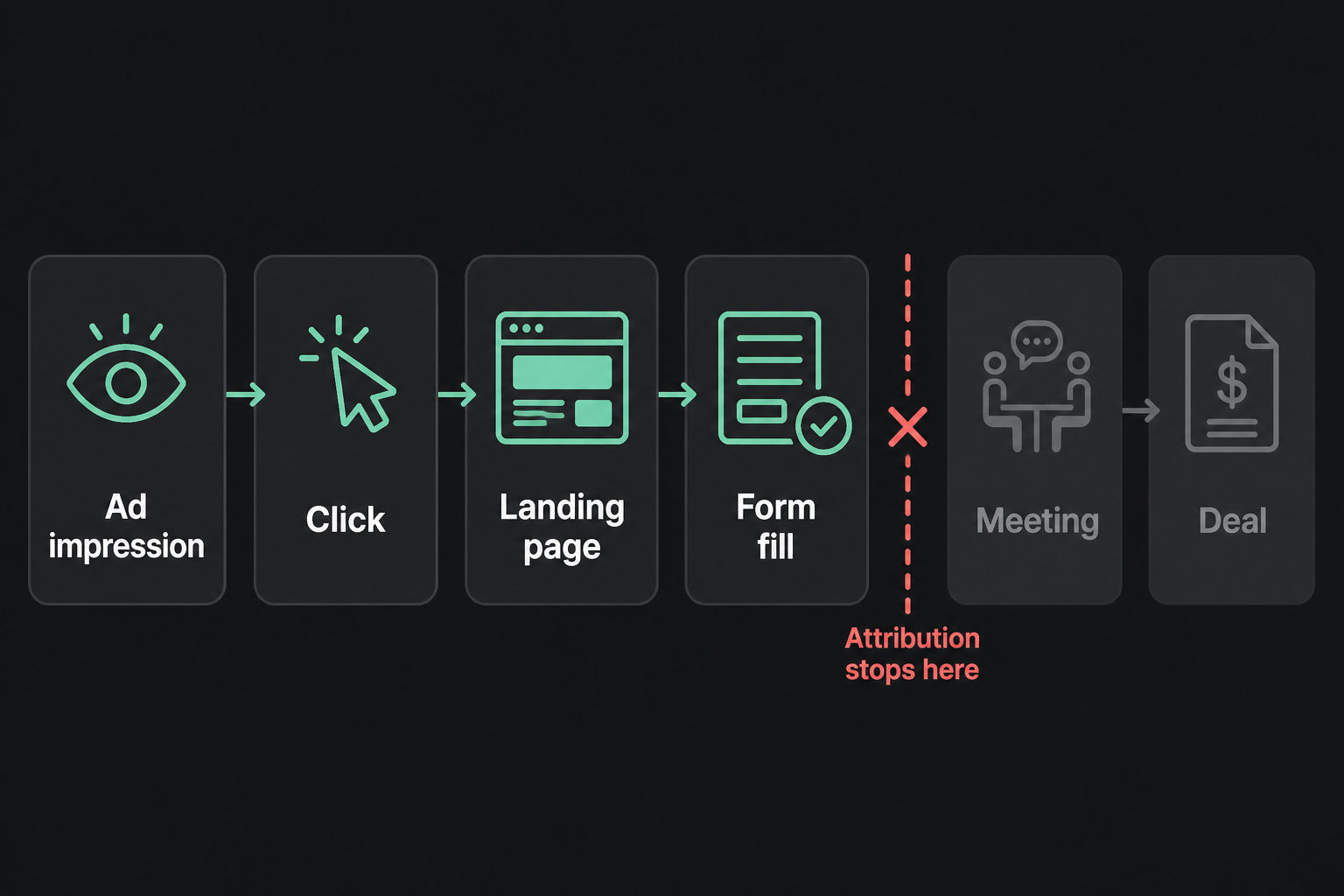
B2B attribution has to keep the account journey intact: Visit → Pages → Meeting → Deal. Paid clicks, organic sessions, calendar bookings, and CRM outcomes sit on one path. Multi-touch sequences, view-through starts that later convert, offline meetings, and returns from Direct or from LLMs like ChatGPT still belong on that journey when they actually happened.
That is the standard we described in what B2B attribution has to connect. Google Ads conversion actions can sit on the Visit or Pages step. They are one input. The path still has to hold everything that led to revenue.
Where do ad platform reports drop the journey?
Ad platform reports drop the journey after the conversion action they were told to count. If that action is a form fill, the sales meeting two weeks later is invisible unless you import it back with matching keys. If the buyer returns branded and converts on Direct, the earlier paid visit can lose the story in marketing analytics even while Google Ads still claims the click.
Teams feel this when paid dashboards look efficient and pipeline looks thin. Media sees claimed conversions. Sales sees meetings that never map cleanly to a click ID. Both views are partial. Neither answers which channels created quality pipeline.
How do CAC and channel quality change?
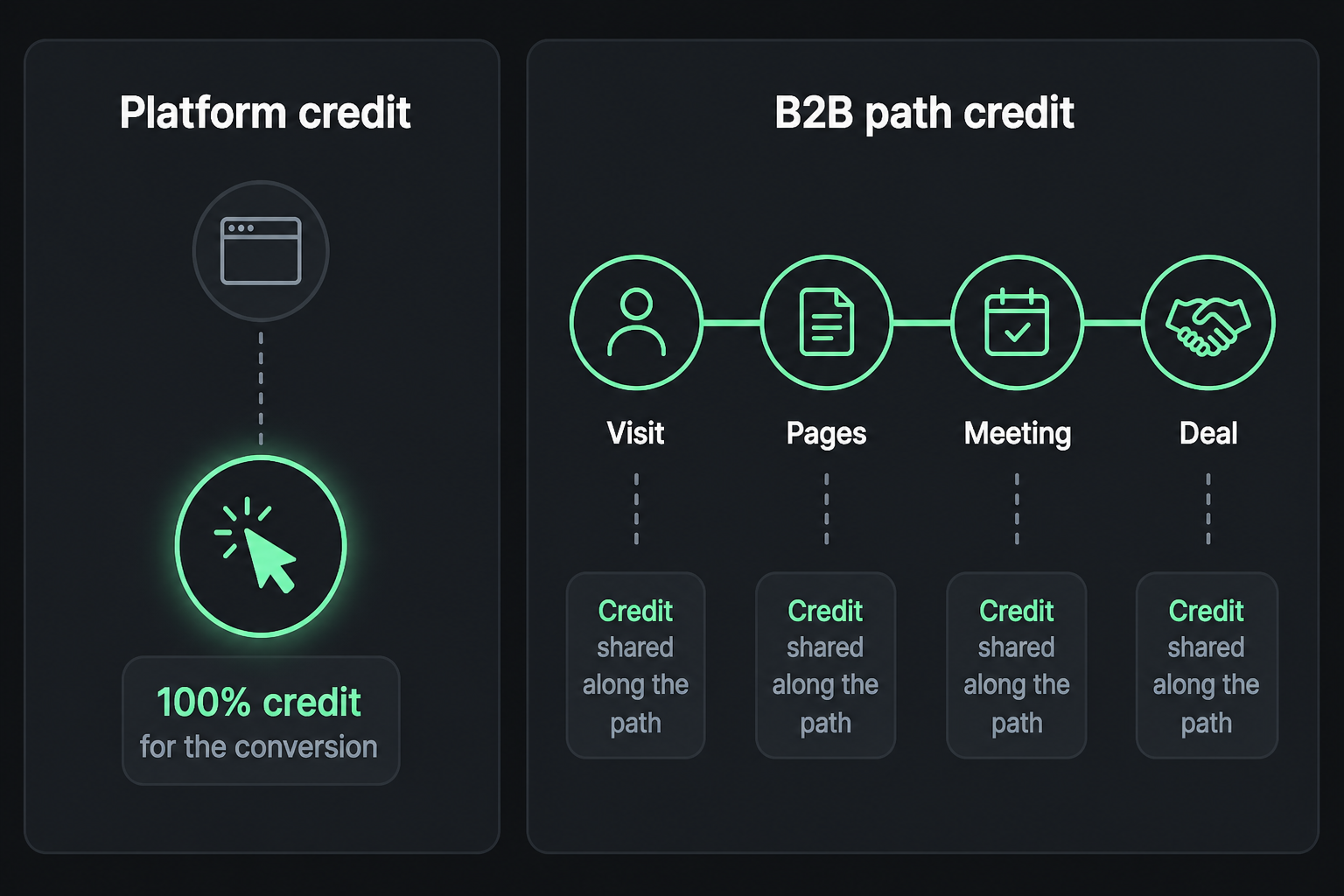
CAC computed from Google Ads spend divided by claimed conversions is a media efficiency number. Real CAC in B2B is cost against revenue path: the meetings and deals that actually closed, with the visits and pages that produced them still attached.
Channel quality follows the same split. A campaign can look cheap on cost-per-conversion inside the ad UI and still produce soft pipeline if those conversions never become meetings. When the path is whole, you can still use Google Ads for bidding and still see which paid visits earned the call. That is the difference between claimed conversion credit and revenue-path credit. See also what view-through attribution means in B2B.
When do you need both?
You still need Google Ads reporting. Bids, creatives, and search terms live there. Keep those conversion actions clean so the platform can optimize. You need B2B attribution when leadership asks which paid visits become pipeline and revenue, including offline meetings on the path and channels Google Ads never sees.
A practical rule: let Google Ads own media optimization. Refuse to treat claimed conversions as closed revenue. When a deal closes, the path should still show the earlier paid visit, the content sessions, the meeting, and the CRM outcome in one place. That is how CAC and channel quality become something you can defend.
What does a working setup look like?
Connect the site to ads, CRM tools like HubSpot, calendars, and Search Console through one pixel and the GTM stack you already run. No warehouse is required to start. Multi-touch, view-through, offline meetings and deals, and LLM attribution sit on the same journey so you can chat with the data, get AI recommendations, and receive a daily report in Slack.
Source is built that way. Real CAC, goals, and channel quality come from the path, not from exporting Google Ads conversion counts into a spreadsheet after the call. Customer data is not used to train external models. Source maintains a SOC 2 Type II report and is ISO 27001 certified.
If you want Google Ads bidding truth and a path that still reaches Visit → Pages → Meeting → Deal, start at Source. Attribution is broken. So we rebuilt it.