


Last-click attribution vs B2B attribution
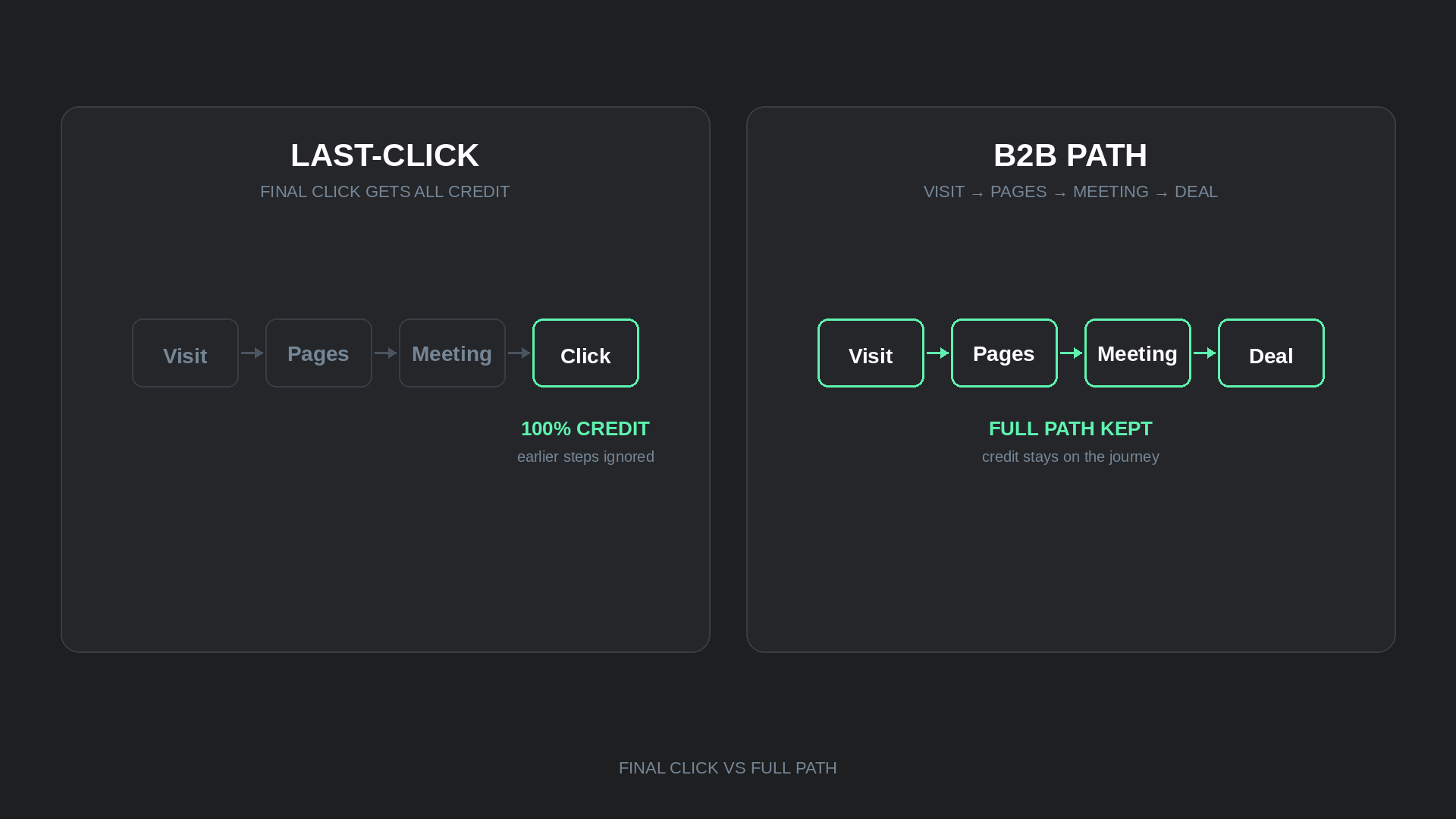
Last-click attribution gives the final click all credit. B2B attribution keeps Visit, Pages, Meeting, and Deal on one path so CAC and channel quality stay honest. That is the real split when teams ask about last-click attribution vs B2B attribution.
Last-click is easy to read in ad platforms and analytics. It is still a single interaction rule. It does not keep the earlier paid visit, the pages that built intent, the calendar meeting, or the closed deal connected as one journey.
We already covered first-touch vs last-touch attribution and multi-touch vs single-touch attribution. This piece sits next to those: a final-click ledger versus the full Visit → Pages → Meeting → Deal path. For the mirror single-touch rule, see first-touch attribution vs B2B attribution.
What does last-click attribution actually credit?
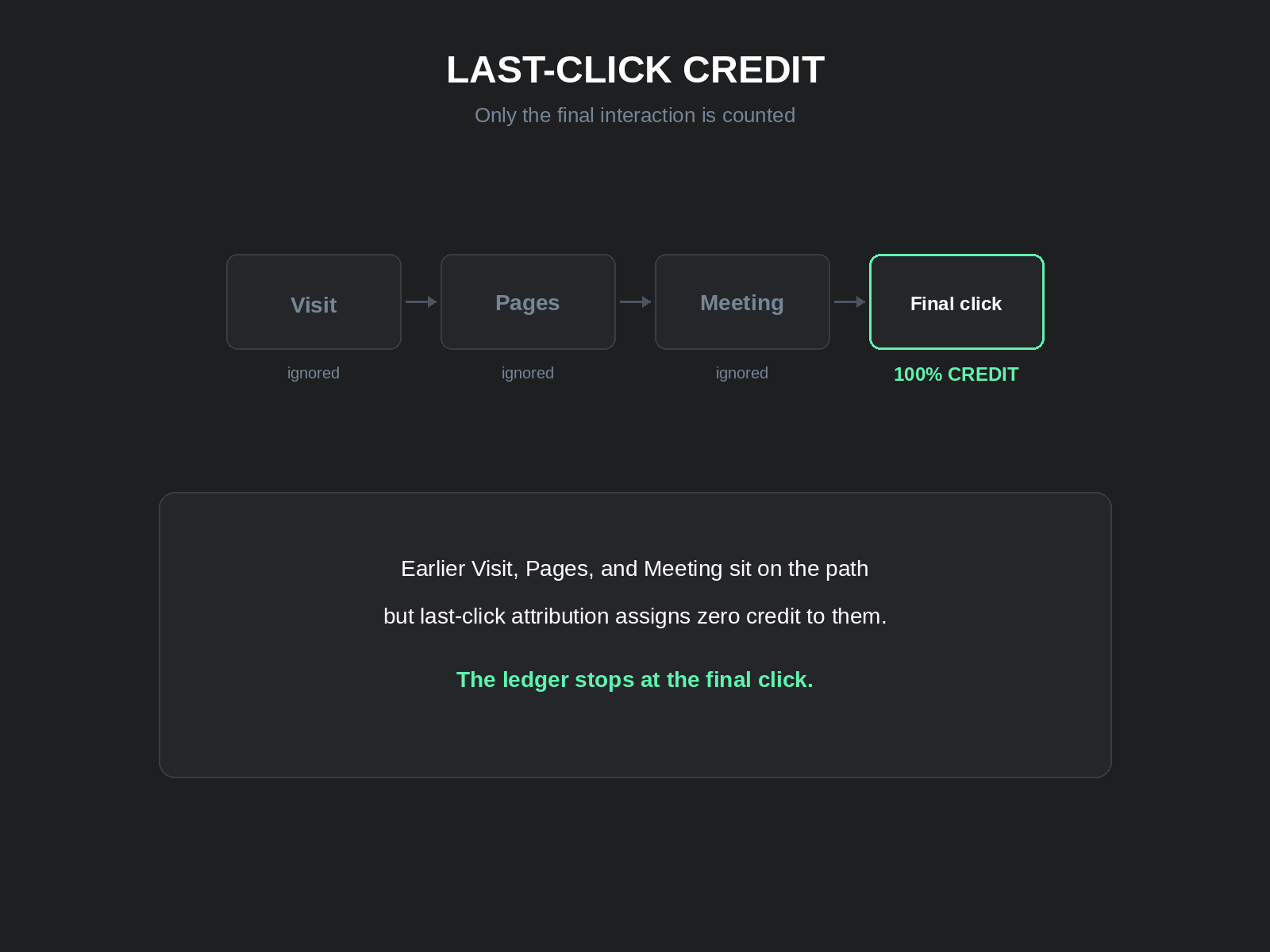
Last-click attribution assigns 100% of conversion credit to the last interaction before the conversion event. In paid media that is often the last ad click. In web analytics it is often the last session that preceded a form submit or signup.
Everything earlier on the path is still real. The first Visit still happened. Pages still got read. A Meeting may already be on the calendar. Last-click simply ignores those steps when it writes the credit row.
That is why last-click feels clean inside Google Ads or a CRM campaign report, and still incomplete for B2B revenue decisions. The model answers “what was last” rather than “what sat on the path to the deal.”
What does B2B attribution have to keep on the path?
B2B attribution has to keep the journey intact. A first Visit lands. Pages get read. A Meeting gets booked. A Deal closes in the CRM. Credit models can weight those steps differently, but the underlying events have to stay connected.
That is the same spine we described in what B2B attribution actually has to connect and in GA4 vs B2B attribution. Last-click can be one view of that path. It cannot be the only ledger if you care about CAC across a long sales cycle.
When the path is complete, you can still read last-click as a useful check on what closed the loop. You just do not let it erase early paid clicks, view-through exposure, Direct returns, or LLM referrals from tools like ChatGPT.
Where does last-click still help?
Keep last-click in the toolkit. It is fast for creative and landing-page tests where the conversion sits close to the click. It is a clear way to see which message was present at the end of a short path.
Sales and RevOps teams also use last-click as a sanity check. If pipeline reviews keep naming one late channel while path data shows a different early driver, you have a measurement gap worth investigating.
Last-click is strongest as a near-term optimization view. It is weakest as the only input for quarterly channel budget and real CAC.
Where does last-click break CAC and channel quality?
Problems show up when last-click becomes the only source of truth for spend decisions.
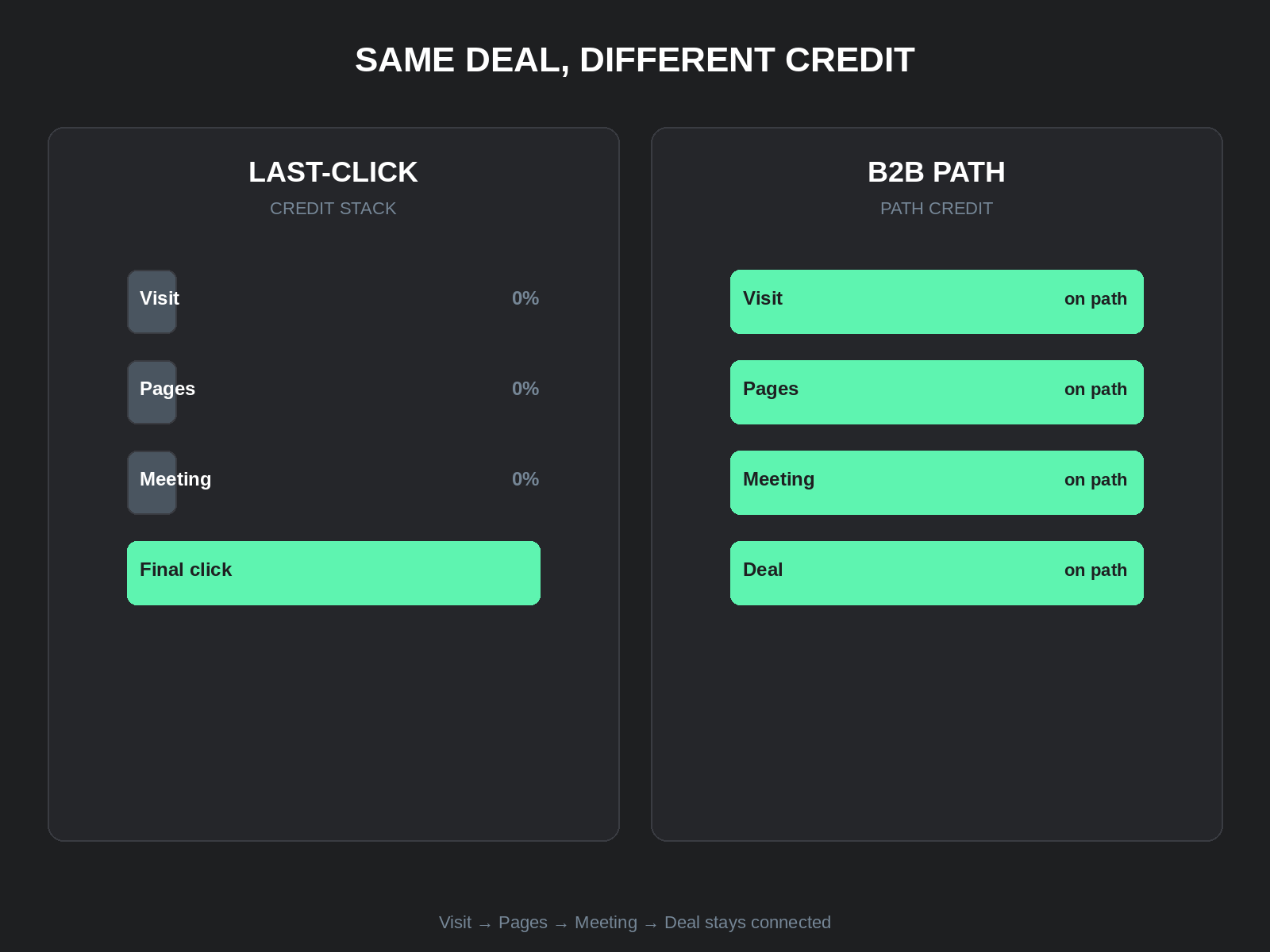
B2B paths are long. A buyer may click a LinkedIn ad in week one, return from organic or Direct later, book a meeting from a teammate’s calendar link, then convert after a branded search click. Last-click hands the whole deal to that final branded click and zeros out the earlier work.
If you divide ad spend by last-click counts alone, CAC moves with late interactions, not with the full revenue path. Channel quality then rewards the last handoff instead of the channels that created the opportunity.
You also lose LLM and assisted traffic that rarely gets the last click. Research in ChatGPT, Claude, Perplexity, or Gemini often shows up as Direct or a weak referral, while last-click still points at a later paid or branded session. Path data keeps those steps visible when last-click cannot.
UTM strings help label campaigns, but they do not fix the model. We covered that split in UTM tracking vs B2B attribution. Labels still need Visit, Pages, Meeting, and Deal on one record.
How should teams use last-click without making it the only ledger?
Run last-click next to multi-touch and path views. Store the final click. Keep Visit, Pages, Meeting, and Deal on the same journey in your attribution stack. Report them side by side.
When last-click and the path agree, you get a clean story. When they disagree, investigate before you reallocate budget. Do not overwrite path credit with a single last interaction.
A simple operating rule: use last-click for short-cycle creative learning, use path data to set CAC and channel quality, and use both in pipeline reviews so marketing and sales share one picture.
Source is built for that path view: one pixel and GTM, CRM and calendar joins, multi-touch and offline steps, plus LLM referrals that usually never win last-click. You can still chat with the data and ask which channels actually sit on closed deals.
A practical check before you trust last-click alone
For the last twenty closed deals, pull the last-click channel and the credited path. Count how often they match. Note every deal where last-click names branded search or Direct while the path shows earlier paid, content, or LLM steps.
That sample is enough to decide whether last-click is a helpful near-term dial or a broken budget ledger. Most B2B teams need both: the final click, and the Visit → Pages → Meeting → Deal record.
If you want that path without a warehouse project, start free at dash.source.app/signup.