


Meta Ads attribution vs B2B attribution
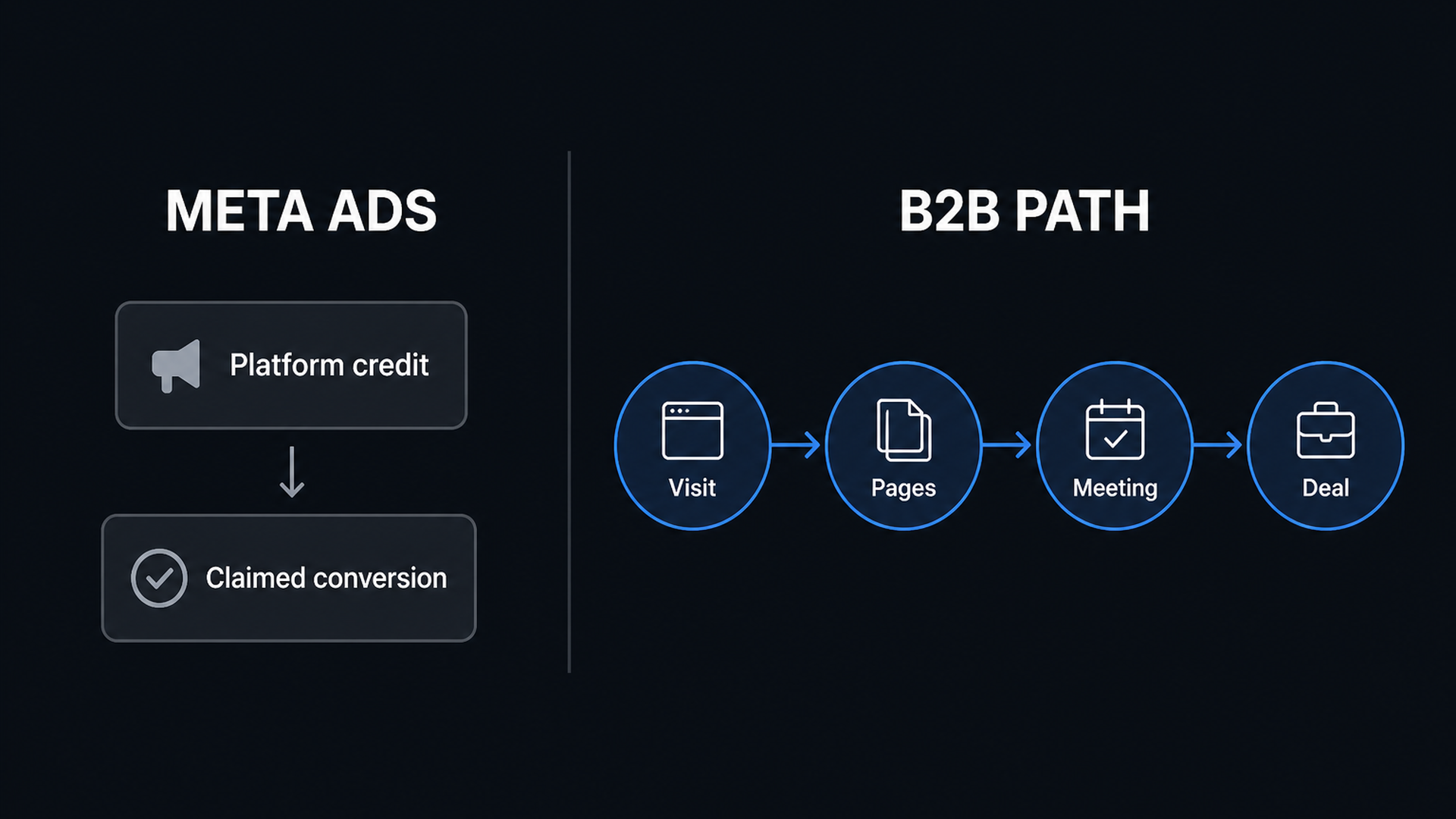
Meta Ads attribution credits conversions the platform claims from Facebook and Instagram ads. B2B attribution keeps Visit, Pages, Meeting, and Deal on one path so CAC and channel quality stay honest. That is the real split when teams ask about Meta Ads attribution vs B2B attribution.
Platform reports are useful for optimizing creative and spend inside Ads Manager. They still answer a different question than revenue attribution. A claimed lead or purchase inside Meta is not the same as a closed deal connected back to the earlier Visit and the pages that built intent.
We already covered Google Ads attribution vs B2B attribution and LinkedIn Ads attribution vs B2B attribution. This piece sits next to those: Meta’s claimed credit versus the full Visit → Pages → Meeting → Deal path.
What does Meta Ads attribution actually credit?
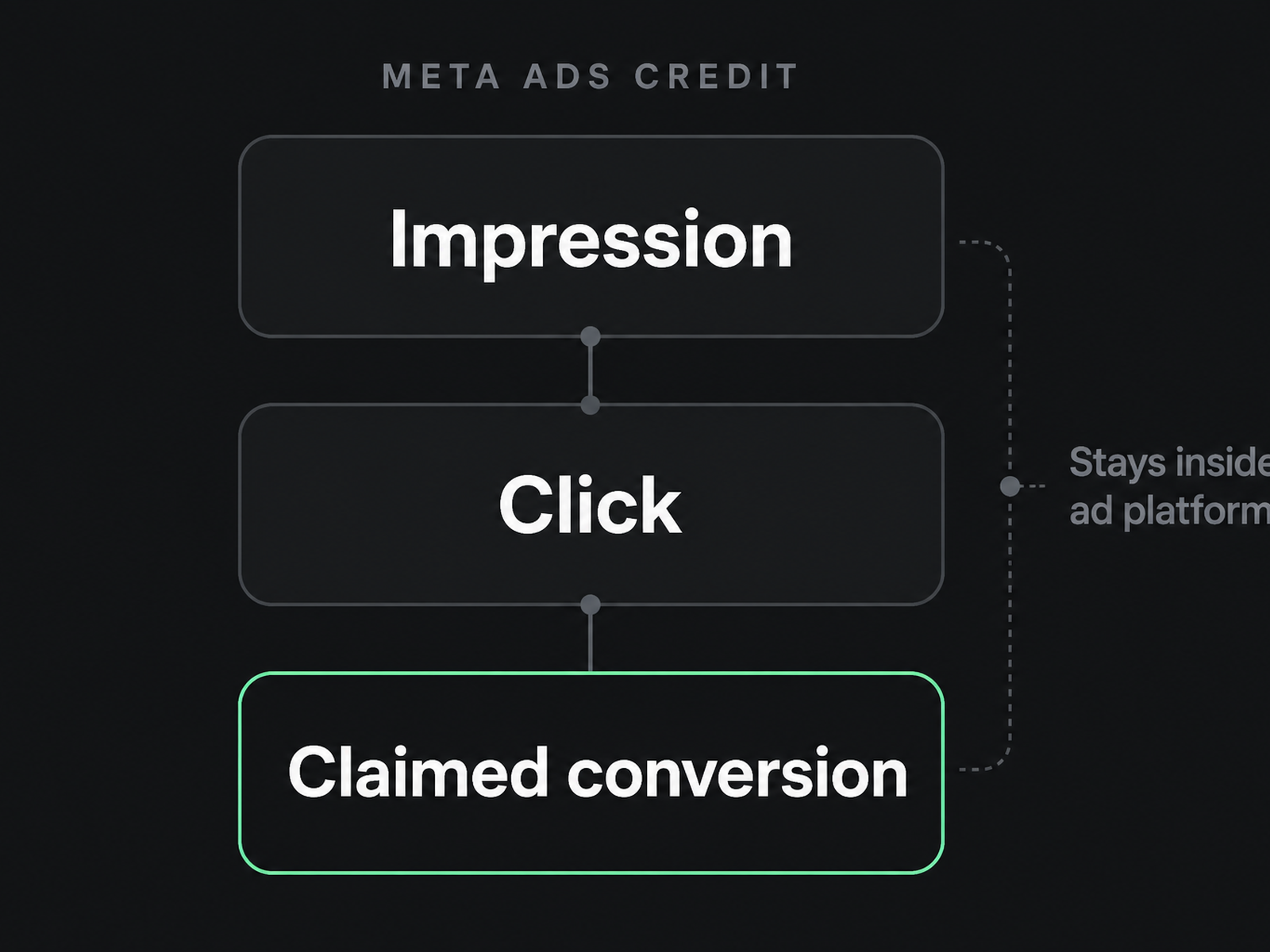
Meta Ads attribution assigns conversion credit inside Meta’s own reporting windows. An impression can count. A click can count. A lead form submit or offsite event the pixel fires can count as a claimed conversion.
That ledger is built for the ad account. It is not built to keep your CRM Deal, calendar Meeting, or later Direct returns on the same journey. View-through windows can also give credit when someone saw the ad and converted later without a click. Helpful for media optimization. Incomplete for B2B revenue math.
So when leadership asks which channel drives pipeline, a Meta dashboard alone answers “what Meta claims” rather than “what sat on the path to the deal.”
What does B2B attribution have to keep on the path?
B2B attribution has to keep the journey intact. A first Visit lands from a Meta click or elsewhere. Pages get read. A Meeting gets booked. A Deal closes in the CRM. Credit models can weight those steps differently, but the underlying events have to stay connected.
That is the same spine we described in what B2B attribution actually has to connect and in what view-through attribution means in B2B. Meta can be one useful view of paid social. It cannot be the only ledger if you care about CAC across a long sales cycle.
When the path is complete, you can still read Meta claimed conversions as a check on creative and audience quality. You just do not let platform credit erase earlier touches, offline meetings, or returns that show up as Direct or LLM referrals from tools like ChatGPT.
Why Meta claimed conversions and revenue CAC disagree
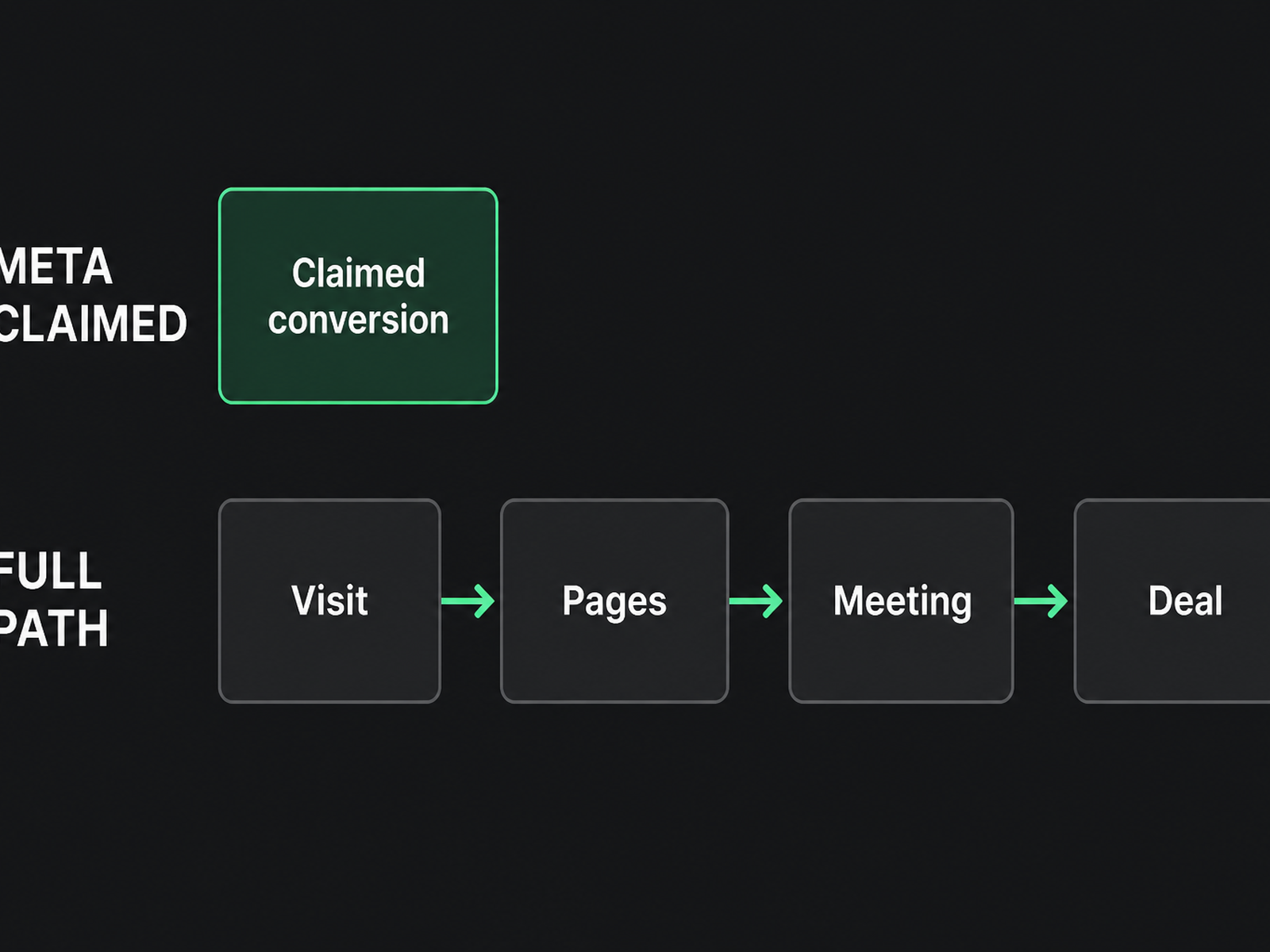
Meta optimizes for the conversion events you configure. A lead form, a landing-page pixel fire, or a custom event can all look like success inside the platform. Revenue teams still need the Meeting and the Deal.
Long B2B cycles make the gap worse. Someone clicks an Instagram ad in week one, returns Direct in week three, books a Meeting from email, and closes two months later. Meta may still show a claimed conversion. Last-click or platform credit may miss the early paid Visit. Multi-touch path credit keeps both the early Meta Visit and the later steps visible.
That is why channel quality and CAC only stabilize when Visit, Pages, Meeting, and Deal share one identity. Platform windows and attribution settings inside Ads Manager do not replace that connection.
How should a B2B team use Meta reports without trusting them alone?
Keep Meta reports for media ops. Use them to judge creative, audience, and spend efficiency against the events Meta can see. Do not paste claimed conversions into the board deck as revenue attribution.
Pair the ad account with a path that starts at Visit. Connect pages and form submits. Bring Meetings from the calendar. Bring Deals from the CRM. Then you can ask honest questions: which Meta campaigns start paths that reach Meetings, and which only produce claimed conversions that never become pipeline.
Source is built for that stack: one pixel and GTM, no warehouse required, multi-touch models, view-through and offline, plus LLM attribution when ChatGPT, Claude, Perplexity, or Gemini send traffic that used to look like Direct. You can chat with the data, get AI recommendations, and ship daily Slack reports without inventing a second source of truth.
A practical checklist for Meta Ads vs B2B attribution
1. Treat Meta claimed conversions as media signals, not closed-won credit.
2. Keep Visit → Pages → Meeting → Deal connected even when the first click was paid social.
3. Separate view-through exposure from click paths so you know which Meta impressions assisted versus which Meta clicks started the journey.
4. Recalculate CAC on deals and pipeline, not on platform conversion counts.
5. Revisit multi-touch weights after you have enough Meetings, not after a week of pixel fires.
FAQ
Is Meta Ads attribution wrong?
No. It is scoped to the ad platform. It becomes wrong only when teams use it as the only revenue ledger.
Does B2B attribution replace Ads Manager?
No. Keep Ads Manager for spend and creative. Use B2B attribution for path-to-revenue questions.
Where does view-through fit?
View-through can show Meta exposure before a later Visit. It still has to land on the same Visit → Pages → Meeting → Deal path to matter for CAC.
If you want that path in one place, start free at dash.source.app/signup or read more on source.app.