


Community attribution in B2B: an FAQ for measuring peer-driven pipeline
Community attribution means giving B2B pipeline credit to the conversations buyers have in Slack groups, Discord servers, Reddit threads, forums, and user groups. You measure it with two kinds of evidence on the same deal: tracked visits from links and referrers you can see, and self-reported answers that name the community when tracking only sees Direct. Put both on the same deal and you can see which communities start real pipeline.
This FAQ covers the questions teams usually ask once they suspect community is doing more than their reports show.
Why does community matter for B2B attribution right now?
Buyers trust peers more than ads, and a lot of that peer talk happens in places your analytics cannot reach. On episode 3 of our podcast, The Developer GTM Playbook, the discussion kept returning to community-driven growth on Reddit, Hacker News, and niche forums as what actually works for developer audiences.
If that is where your pipeline starts, a report built only on clicks will keep handing the credit to whatever touch came last.
Why does community traffic show up as Direct?
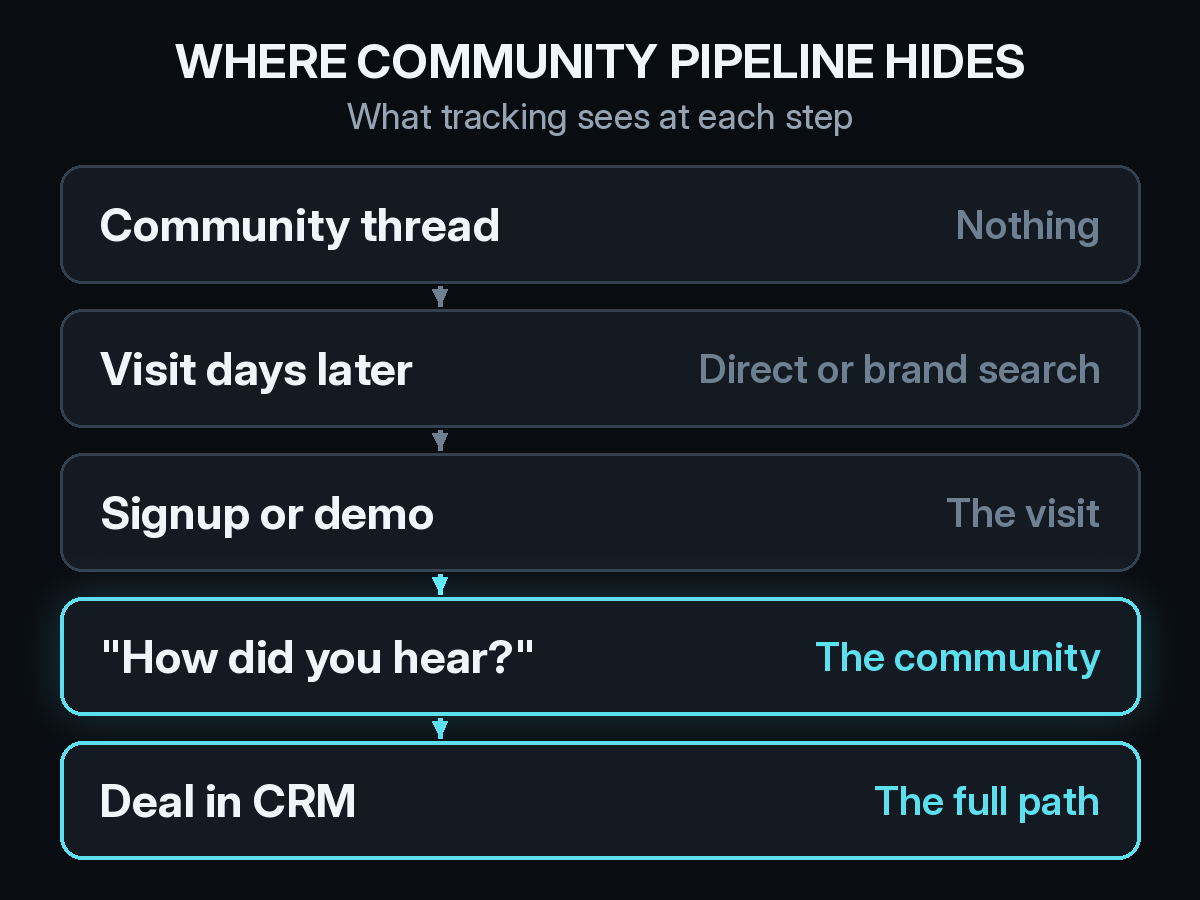
Most community touches happen inside apps. Someone recommends you in a Slack channel or a Discord server, and the link opens with no referrer. More often, nobody clicks at all. The buyer remembers your name, comes back days later, and types your URL or searches for your company.
Your analytics records that visit as Direct or branded search. The visit is real, but its origin is gone. Our post on B2B attribution myths that inflate Direct traffic explains why so much of Direct is shared links, and how to find the deals hiding in Direct traffic shows how to pull those deals back out.
Which community touches can you track directly?
More than most teams expect. Start with the links you control.
Links your team posts. When someone from your team shares a guide or a signup link in a community, tag it with UTMs. Keep one convention, such as utm_medium=community and utm_source set to the community's name, so every post rolls up the same way. Our list of UTM mistakes that send B2B deals to Direct covers the naming habits that break this.
Referrers from public forums. Clicks from Reddit, Hacker News, and most web forums opened in a browser usually carry a referrer. Those visits can be credited to the source without any tagging.
Your own community and events. If you run a community or host meetups, the invite links, welcome messages, and event pages are all yours to tag.
What you cannot tag is the recommendation a customer makes on their own. That is where asking comes in.
How do you capture the community touches tracking misses?
Ask on the form. Add a required "How did you hear about us?" field to signup and demo forms, with a free text box. Then sort the answers into categories in your CRM, and keep Community as its own category instead of folding it into Social or Word of mouth.
When answers name a specific place, such as a Slack group or a subreddit, keep the name. Over a few months, that list tells you which communities produce buyers. Our self-reported attribution checklist for B2B teams walks through the field setup in HubSpot and other CRMs.
Sales calls add a second source. A rep who hears "a friend in a founder Slack told me about you" should log it on the deal, in a field marketing can report on.
How do you report community pipeline without overclaiming?
Count community at the deal level. A deal gets community credit when its path shows a community touch: a tagged link, a forum referrer, a form answer, or a sales note. Then let your multi-touch model share credit with the other touches on that path.
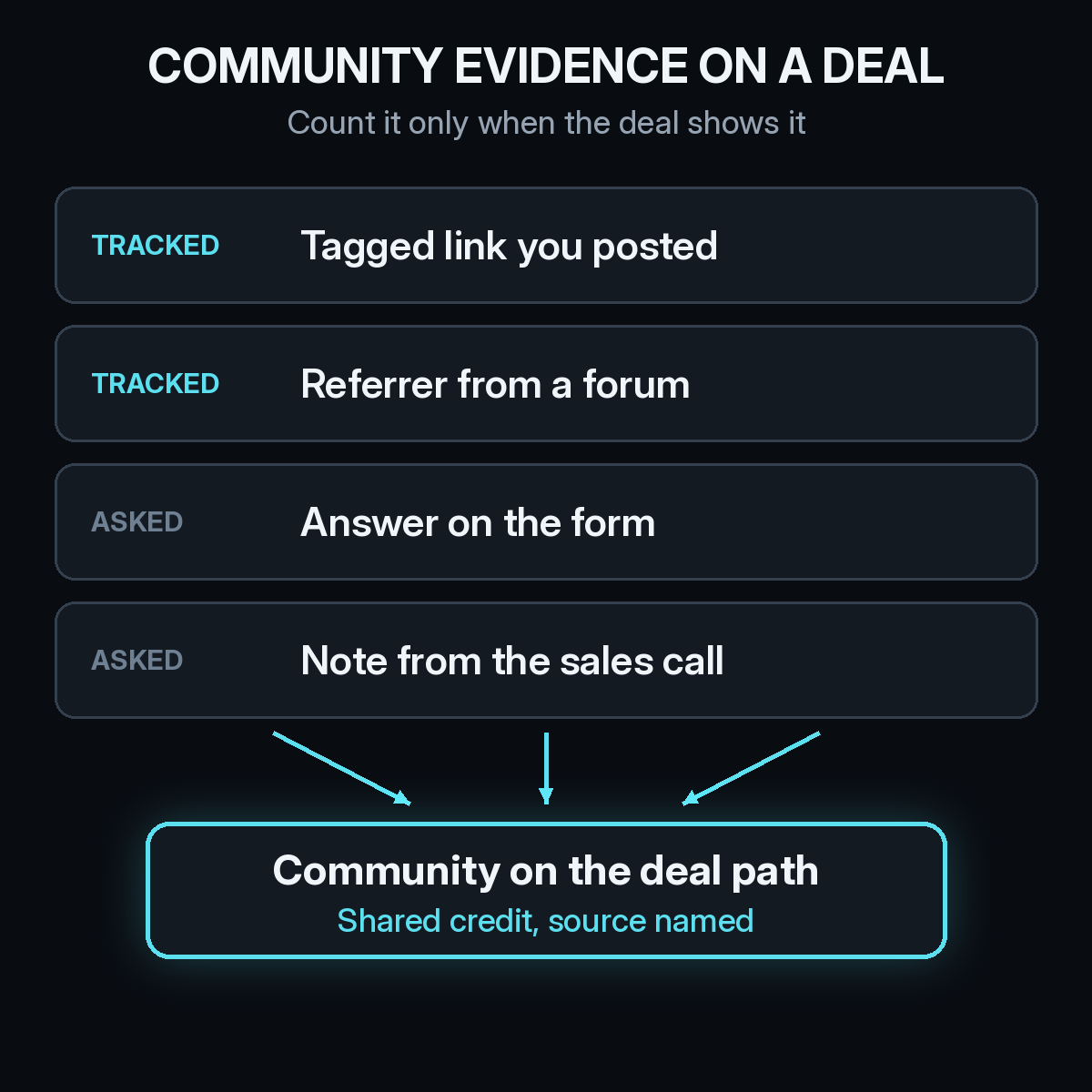
Keep the evidence visible in the report. Show how many community deals came from tracked visits and how many came only from self-reported answers. That split helps finance and sales read the number without assuming it was inflated, and it shows where your tracking needs work.
When a community member introduces a buyer directly, treat it like a referral. Our guide to referral attribution for B2B covers how to credit intros, and our piece on what to do when sales and marketing both claim the same deal helps settle the overlap.
Do community conversations show up in AI search answers?
Yes, and this is a newer path to watch. AI assistants such as ChatGPT, Claude, Perplexity, and Gemini often draw on public community threads when they answer product questions. A Reddit thread that recommends you can end up shaping an AI answer months later.
The buyer then arrives from the assistant, not from the thread. LLM attribution catches that visit and credits the AI source, and a form answer may still name the community. Our guide to tracking traffic from ChatGPT and other LLMs explains how to read those visits.
What should a small team set up first?
Pick one week and do the basics. Agree on a UTM convention for community posts and share it with everyone who posts. Add the "How did you hear about us?" field with a Community category. Create a deal field for sales to log community mentions.
Then review once a month. Look at deals whose first tracked touch is Direct or branded search, and check the form answer and sales notes for a community. Those deals are your clearest view of what community is worth.
How Source tracks community touches
Source installs with one pixel or Google Tag Manager, with no data warehouse to build. It records every visit with its UTMs and referrer, so tagged community links and forum clicks land on the buyer's path automatically. Multi-touch, view-through, offline, and LLM attribution keep the other touches on that same path, including visits from ChatGPT, Claude, Perplexity, and Gemini.
You can chat with your data to ask which communities show up on closed deals, get AI recommendations, and receive daily Slack reports. Real CAC, goals, and channel quality give community the same scrutiny as paid channels. Source is SOC 2 Type II and ISO 27001 certified, and customer data is not used to train external models.
If community is part of how you grow, start free at dash.source.app/signup and see which conversations turn into pipeline.