


How cookie consent changes marketing attribution
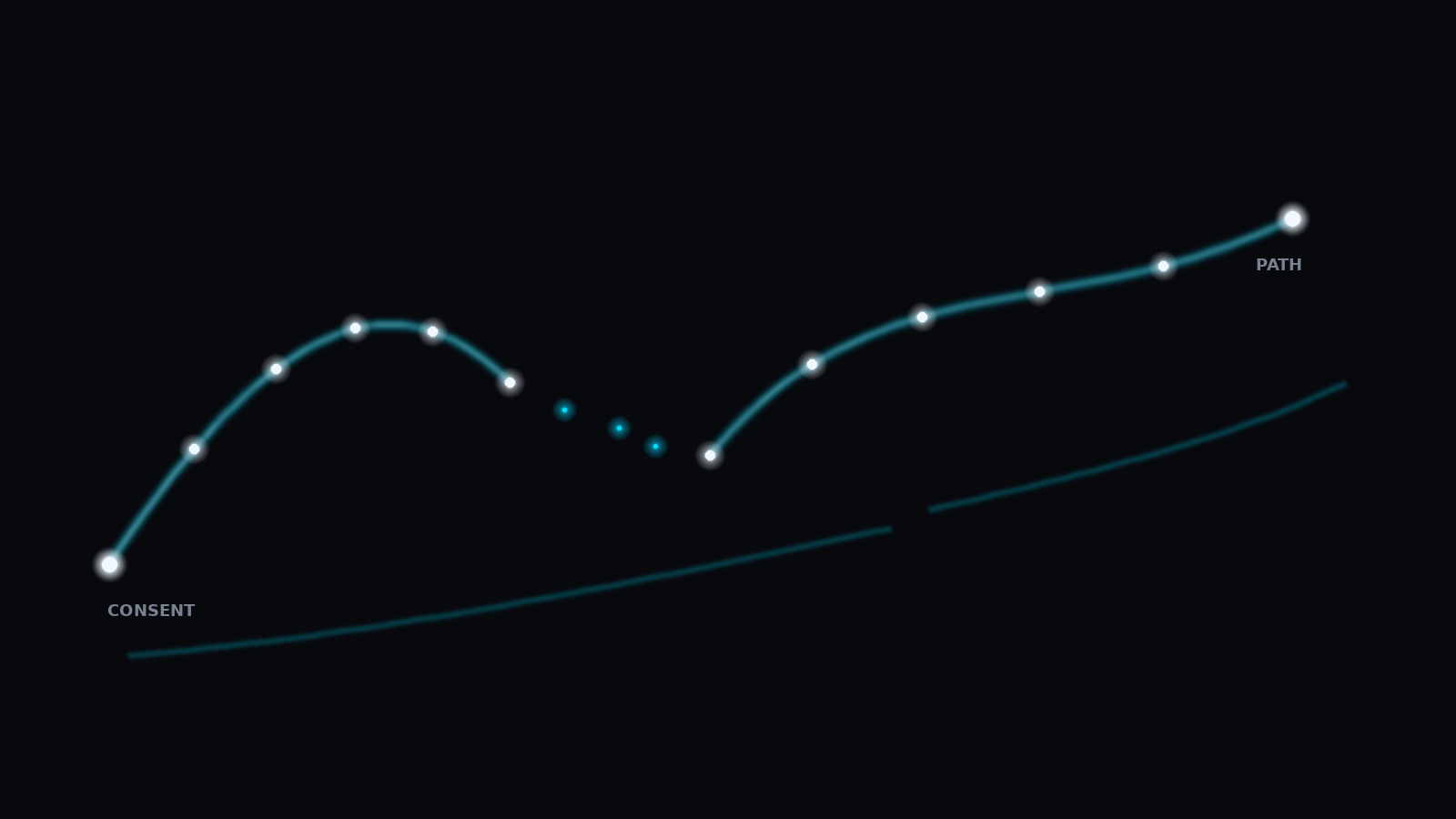
Cookie consent changes marketing attribution in a blunt way. When a visitor refuses cookies, the browser join that would have tied the Visit to later Meetings and Deals often never fires. The buyer still reads, still books, still closes. Your report just loses the thread.
That gap shows up as Direct, as missing assists, and as channel charts that look clean until Finance asks which spend actually produced pipeline. Consent banners are not a legal footnote for B2B teams. They are part of the measurement system.
What cookie consent actually removes from the path
Consent modes vary by CMP and region, but the practical effect is the same for most marketing stacks. Refused consent blocks or limits third-party identifiers, client-side pixels, and the cookies that stitch sessions across days. Paid clicks can still land. Organic pages can still load. The durable ID that would have linked those sessions to a CRM contact may never be written.
B2B attribution needs Visit to Pages to Meeting to Deal. Consent refusal punches a hole after Visit. The later CRM stages remain. The join between early media and late revenue thins out. That is why teams suddenly see Direct grow after a banner redesign even though demand did not move.
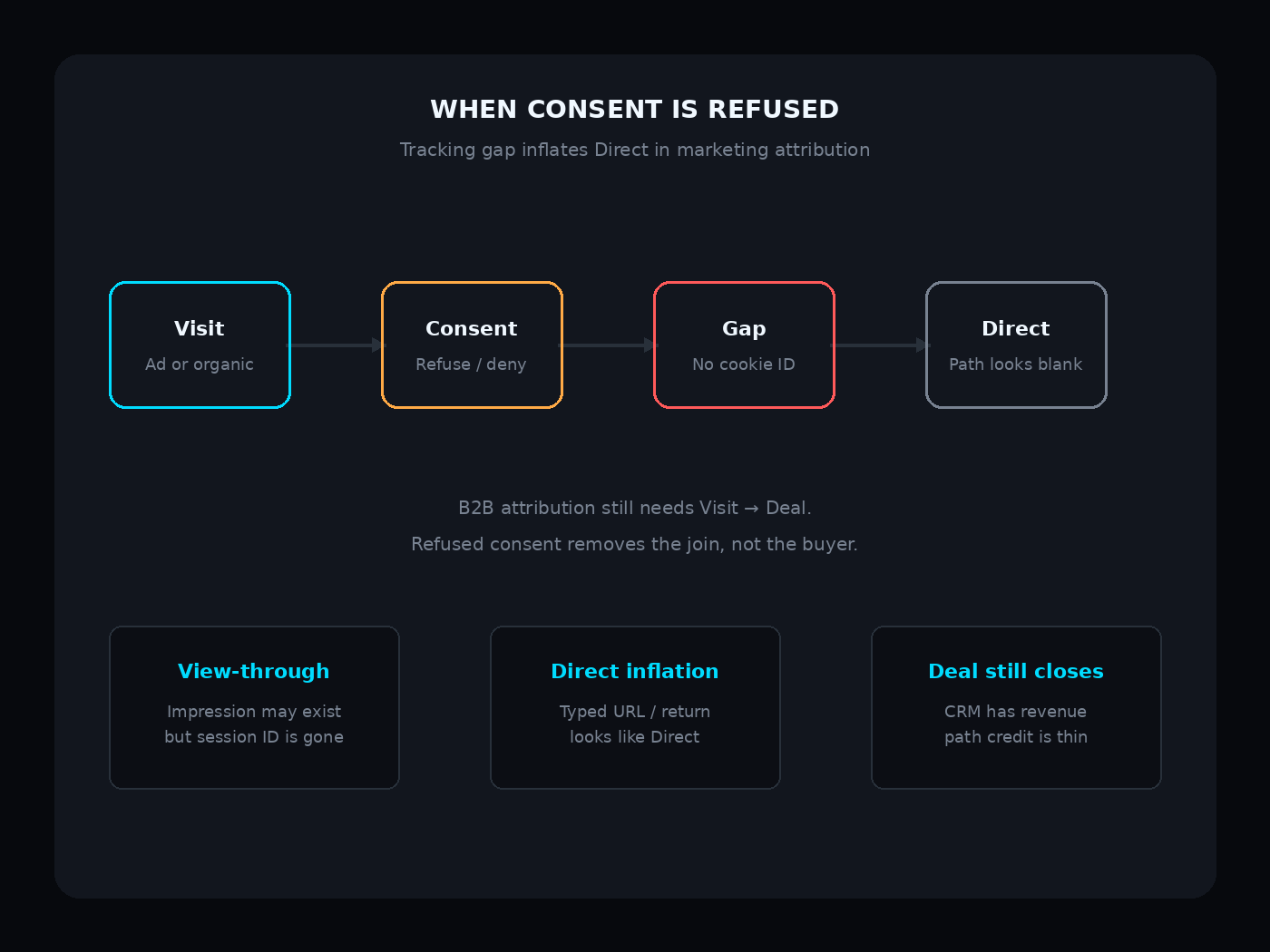
View-through attribution feels this first. An impression can still be logged server-side, then the clickless return visit arrives without a usable cookie. The impression sits in an ad platform. The return looks like Direct. The Deal closes in the CRM. Nothing on that path is fake. The stitch is missing.
Why Direct traffic balloons after consent changes
Direct is the bucket analytics use when no referrer or campaign parameter survives. After consent refusal, return visits, typed URLs, bookmark opens, and many dark social arrivals lose the tags that would have named Paid search, LinkedIn, or a partner page. They land in Direct.
Teams that treat Direct as "brand" or "noise" then cut the channels that actually seeded those visits. The honest read is different. Direct after a consent change is often attributed demand with a broken join. Keep the bucket sized and visible. Do not invent a last click to make the chart pretty. For how deals hide in that bucket, see how to find deals hiding in Direct traffic.
B2B attribution still needs Visit to Deal
Marketing attribution in B2B is not a session report. It is a path that survives weeks of buying. Cookie consent shortens the browser half of that path. It does not remove the requirement to credit channels that create Meetings and Deals.
That is why last-click exports from Google Ads or a single CRM Lead Source field fail after consent rates drop. They assume the browser still carries identity. When it does not, you need joins that do not depend on one third-party cookie alone. What B2B attribution has to connect maps the Visit to Deal pieces that still have to line up.
View-through and consent: partial, not useless
View-through still matters when paid impressions create later demand. Consent refusal makes classic pixel-based view-through noisier because the return session may not share an ID with the impression event.
Do not delete view-through from the model. Scope it. Prefer first-party or ad-platform conversions that your CMP allows, then join those signals to CRM Deals on account or email after the form. Treat unresolved view-through as a known partial, the same way you treat offline events. Background on the mechanic: view-through attribution in B2B.
How to keep marketing attribution usable after consent dropoff
Design for the gap instead of pretending the old cookie path still exists.
Capture consented first-party events through your tag manager and server endpoints when the visitor accepts. For refused visitors, lean on form fields, self-reported "how did you hear about us," and CRM stage history. Ask early, store the answer on the contact and the Deal, and join it back to spend categories you already trust.

Self-reported answers are not a replacement for click paths. They are the backup when the click path is blank. Offline touches and partner intros work the same way. Keep them on the Visit to Deal ledger so CAC stays computable. More on that join: self-reported attribution on the B2B path.
HubSpot and similar CRMs already hold Meeting and Deal stages. Attribution work after consent is reconnecting early Visits and spend to those stages with whatever identifiers you still have: email, account domain, consented first-party IDs, and self-reported channel.
What to stop doing in reports
Stop zeroing Direct because it looks messy. Stop forcing every Deal onto the last paid click when consent rates crater. Stop comparing pre-banner and post-banner channel mix as if the measurement surface did not change. Annotate the banner launch date on channel reports the same way you annotate a pricing change.
Also stop treating GA4 session charts as Deal truth when cookies are limited. Session tools and CRM paths answer different questions. Consent makes that split sharper. Context: why GA4 cannot tell you which channel closed the deal.
How Source handles the path with consent in the picture
Source ties Visit, Pages, Meeting, and Deal with one pixel and your GTM setup. No warehouse required. You can chat with the data, get AI recommendations, and send daily Slack reports. Multi-touch, view-through, offline, and LLM attribution (ChatGPT, Claude, Perplexity, Gemini) stay on the same path so CAC stays real when browser IDs drop out.
Source is SOC 2 Type II and ISO 27001 certified. Customer data is not used to train external models. If cookie consent has started rewriting your channel mix, start a Source workspace or read more at source.app.