


Attribution for early-stage B2B startups: how a seed team proves paid social works
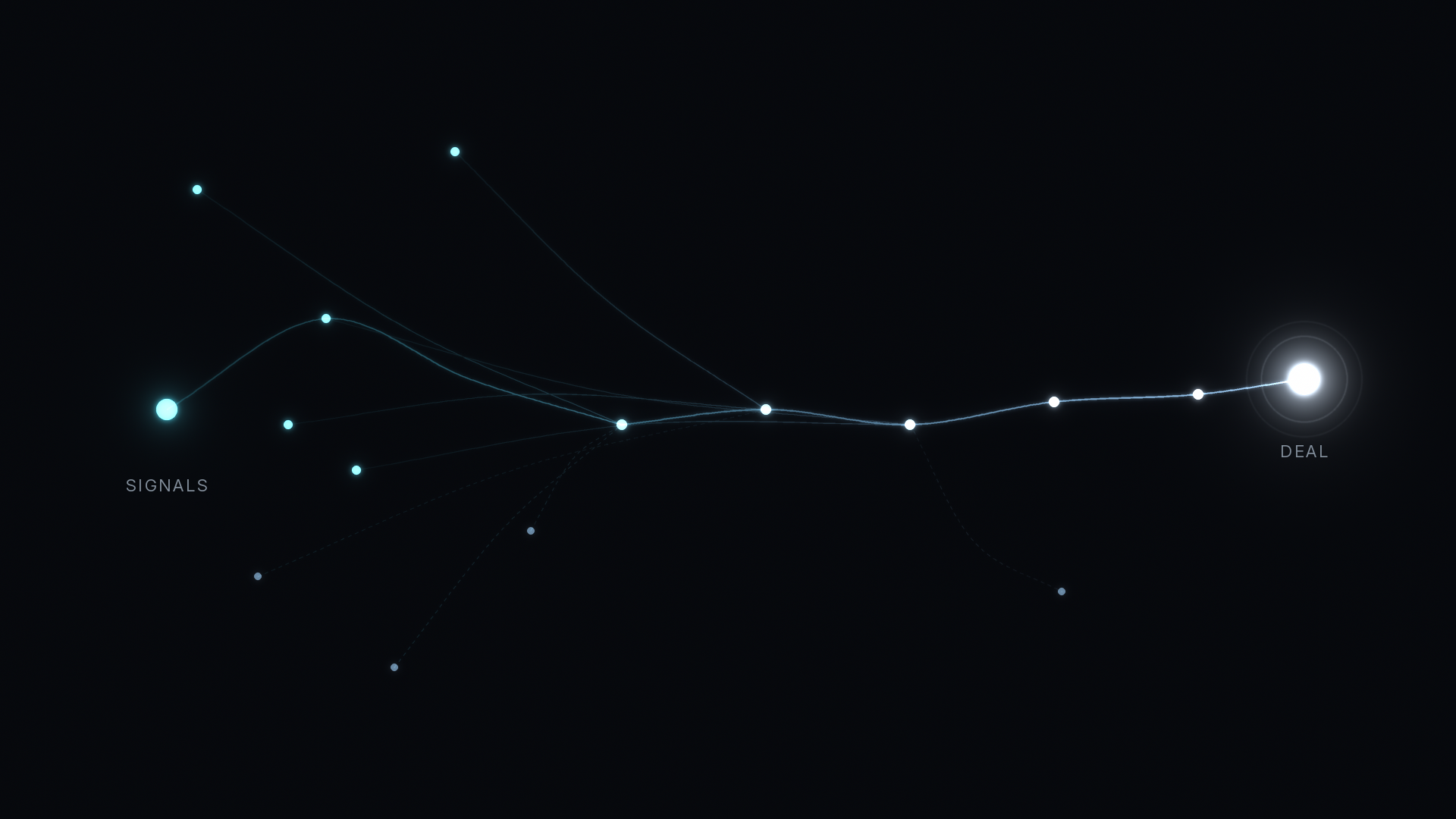
Attribution for an early-stage B2B startup means collecting evidence about which channels start deals, even when you close only a handful a quarter. At that volume no model will give you a clean percentage per channel. It can still show you which target accounts showed up, what they touched before a demo, and what buyers say brought them in. Set that up before you spend, read the early signals first, and judge revenue only once enough deals have closed.
Below, we walk through one scenario: a seed-stage team that wants to know whether paid social is worth a bigger budget.
What can attribution tell a startup with only a few deals?
Less than a big company gets, but more than most founders expect. A small team rarely has enough closed deals to say "LinkedIn drove a third of revenue" with confidence. It does have enough to answer narrower questions. Are the right companies visiting? Do they come back? When someone books a demo, what was on their path?
Those answers arrive in a predictable order. Visits from target accounts show up in the first weeks. Pipeline by channel takes a quarter or so. Closed-won by channel takes longer, because B2B deals take time to close. Reading each signal at the right moment keeps the team from cutting a channel too early or scaling one on a hunch.

The scenario: a seed team testing LinkedIn ads
Picture a seed-stage B2B company with a founder doing sales, one marketer, and a short list of target accounts. Most deals so far came from the founder's network. The team wants to test LinkedIn Ads for a quarter and needs to decide, at the end, whether to double the budget or move it elsewhere.
The risk is familiar. B2B buyers often see an ad, do nothing, and come back weeks later through a branded search or a colleague's link. If the team only counts clicks, the ads will look weak even when they are working. Our post on LinkedIn Ads attribution in B2B covers why platform-reported numbers rarely match what ends up in the CRM.
Step one: set up tracking before the first dollar
The team does four things before launching the campaign.
- Installs one tracking pixel, or the same tag through Google Tag Manager, so every visit is recorded with its referrer and UTMs.
- Agrees on one UTM convention for every ad, post, and email link, so a campaign shows up as one row instead of five.
- Connects the CRM, such as HubSpot, so demos and deals sit on the same timeline as web visits.
- Adds a "How did you hear about us?" field to the demo form.
None of this needs a data warehouse or an engineer. It does need to happen first, because tracking added mid-test leaves the earliest, most useful weeks blank. Our list of UTM mistakes that break B2B attribution is worth a read before you name the first campaign.
What should the team watch in the first month?
Not revenue. In the first month, the team watches whether the ads put the right accounts on the site. Three questions are enough:
- Are companies from the target list visiting after the campaign starts?
- Are any of them coming back a second or third time?
- Which pages do they read, and does anyone reach pricing?
If the answers are no across the board, the targeting or the message needs work, and the team can fix it while the test is still running. If they are yes, the ads are doing their first job, even if almost nobody clicked.
How do you credit ads nobody clicked?
This is where small teams lose the most signal. Two methods fill the gap. View-through attribution connects a later visit to an ad the person saw earlier, so impressions stay on the path. Self-reported attribution asks the buyer directly, and their answer often names a channel no tracking could see.
Here is how one deal from the test might look. The buyer saw an ad and never clicked. A colleague shared the founder's post in Slack. A week later the buyer searched the company name, read the pricing page twice, and booked a demo, writing "Saw your LinkedIn ads" on the form.

Last-click reporting would give that deal to branded search. A path with view-through and the buyer's own answer shows paid social opened the door. Our guides to view-through attribution and the self-reported attribution checklist cover how to set both up so the data holds up.
When is it fair to call the test?
At the end of the quarter, the team will not have a statistically clean answer. It will have a short list of real deals and demos with their full paths, plus what buyers said. That is enough to make a call if you read it honestly.
A fair test asks whether paid social appeared on the paths of the deals that matter, whether buyers named it unprompted, and what the spend works out to per opportunity it touched. Our explainer on reading CAC by channel when deals take months shows how to match spend to the deals it started, not the deals that happened to close that month.
What mistakes do small teams make?
The most common is judging a channel on clicks alone, which undercounts anything buyers see before they search. Next is changing the campaign, the UTMs, and the landing page all at once, so nothing can be compared. Another is treating the founder's network as a separate world. Referrals and warm intros are a channel too, and they belong on the same path as ads and content.
Finally, many teams wait to set up attribution until they have "enough data." The data only becomes enough if it is being collected. If you are building the habit from scratch, our marketing attribution playbook for your first 90 days lays out the order to do things in.
How Source helps a small team
Source installs with one pixel or Google Tag Manager, with no warehouse to build. It connects ads and your CRM, keeps multi-touch, view-through, offline, and LLM attribution on one buyer path, and lets you chat with your data to ask which accounts touched a campaign before a demo. AI recommendations and daily Slack reports keep a busy founder up to date without opening another dashboard. Real CAC, goals, and channel quality show whether a channel is worth more budget.
Source is SOC 2 Type II and ISO 27001 certified, and customer data is not used to train external models. There is a free plan, so a seed team can start tracking before the first campaign goes live. Start free at dash.source.app/signup.