


Podcast attribution for B2B: tracing pipeline back to the episode

Podcast attribution connects a B2B deal to the podcast episode that first put your company in front of the buyer. Most listeners never click anything. They hear a sponsor read or a guest interview on a commute, then search your name, type your URL, or book a demo days later. The podcast did the work, and the credit lands on branded search, Direct, or a free-text answer on your demo form.
That gap is why podcasts tend to look weak in click-based reports and strong in sales conversations. Attribution for this channel means collecting every signal a listener leaves and tying all of them to the same Deal.
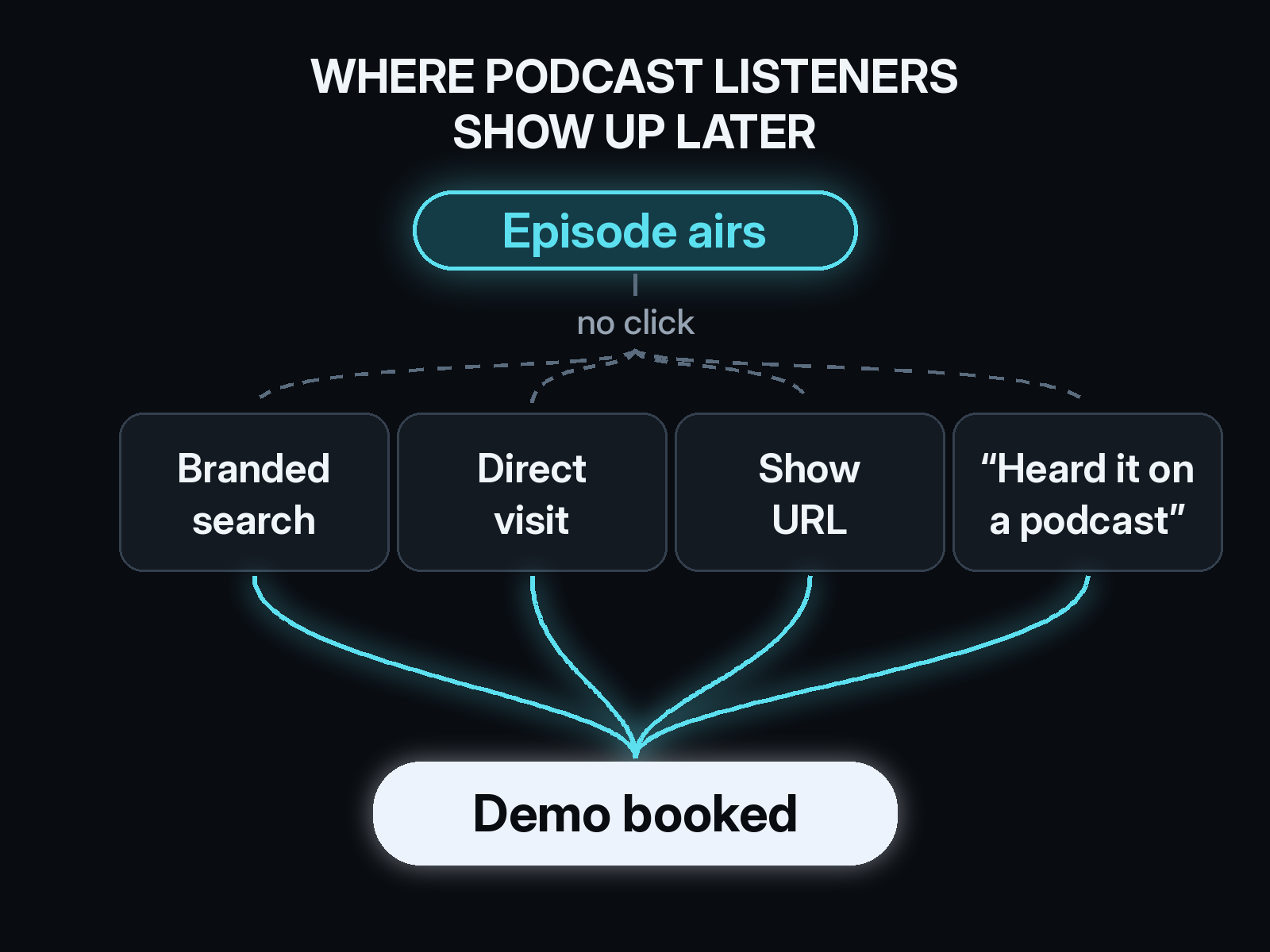
Why podcast listeners rarely leave a click
Audio has nothing to click while it plays. Show notes carry links, and a small share of listeners open them. Podcast apps usually send no referrer when someone does tap through, so even those Visits can arrive looking like Direct traffic.
Hosting platforms report downloads and listens. Those numbers describe the audience. They do not tell you which companies heard the episode or whether any of them became pipeline.
The result looks a lot like dark social. A buyer hears about you somewhere you cannot track and shows up through a door that hides where they came from. The same habits that help you find the deals hiding in Direct traffic apply here.
Which signals a podcast leaves behind
A show-specific URL is the cleanest signal. Give each show a short path on your domain that redirects to a landing page with UTM tags for that show and episode. Hosts can say it out loud and put it in the show notes. Promo codes matter less in B2B because there is rarely a checkout to enter them.
The self-reported answer is next. A required “How did you hear about us?” field on the demo form catches listeners who typed your homepage from memory. Answers are messy and people forget, so treat them as evidence to line up with the Visit data. Our piece on when to trust self-reported attribution covers how to word the question.
Branded search often moves after an episode airs. Google Search Console shows impressions and clicks for queries containing your company name, so you can compare the weeks after an air date with the weeks before. Direct Visits to your homepage and pricing page tend to move in the same window.
AI answers are a newer path. A listener who half remembers your name may ask ChatGPT, Claude, Perplexity, or Gemini what you do, then click through from the answer. Count LLM referrals in the same post-episode window so that traffic is not credited to the AI tool alone.
Setting up podcast attribution, step by step
The setup takes an afternoon and works for paid sponsorships, guest spots, and your own show.
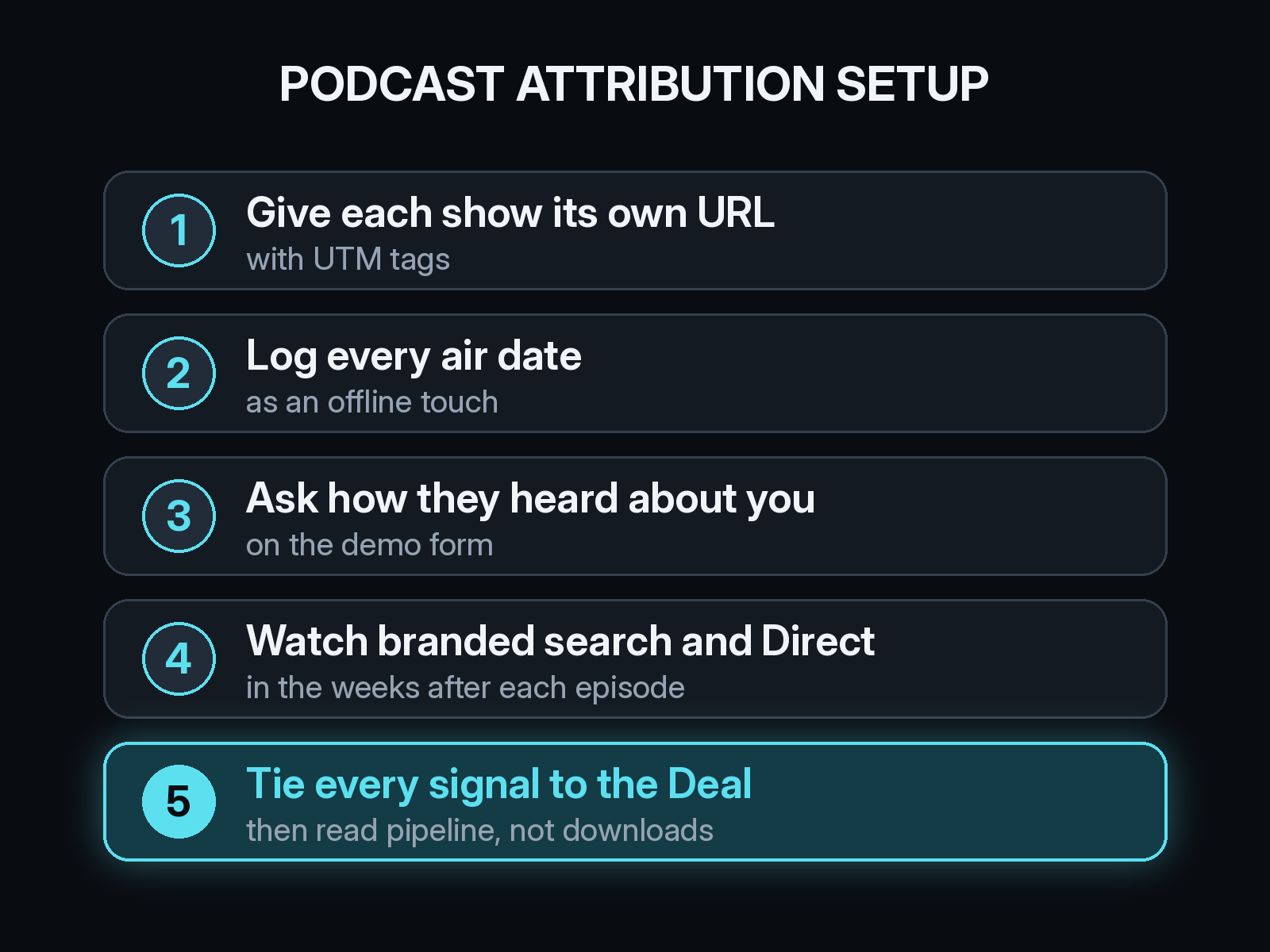
Give each show its own URL. One path per show, tagged with utm_source set to the show name and utm_medium set to podcast. Keep the naming consistent so every episode rolls up to the same channel.
Log every air date. Record the date each episode or sponsor read goes live as an offline touch, the same way you would record a conference. Our guide to offline attribution in B2B explains how those touches sit on a buyer's timeline next to web Visits.
Ask how they heard about you. Add the field to the demo form and keep “Podcast” as an option with a text box for the show name.
Watch branded search and Direct after each episode. Compare the two to four weeks after an air date with the same span before it, and note any other campaigns that ran in that window.
Tie every signal to the Deal. The show URL Visit, the form answer, and the lift around the air date all belong on the path of a contact and their Deal in your CRM, whether that is HubSpot or another system. Pipeline is the number you report.
What to measure instead of downloads
Start with Meetings and pipeline from contacts who carry at least one podcast signal. That number answers the question your CFO will ask about a sponsorship: did it start any deals.
Cost per Meeting comes next, then cost per customer once enough Deals have closed. Podcast deals usually take months, so group them by the month of the episode and wait out your sales cycle before you judge a show. Our explainer on reading CAC by channel when B2B deals take months walks through that cohort math.
A podcast touch works much like an ad impression. It shapes the buyer without a click, which is why view-through attribution in B2B and podcast attribution run into the same reporting problem. In both cases you give the channel partial credit on the path and keep the click-only view as a floor.
Where podcast attribution goes wrong
Teams often treat Visits to the show URL as the whole count. Most listeners never type it, so the show gets a fraction of the credit it earned.
The opposite mistake is crediting every branded search spike to the show. If you launched a LinkedIn Ads campaign the same week, the spike belongs to both, and the path data should decide how it is split.
Guest appearances get skipped. When your founder talks on someone else's podcast, that is a podcast touch too, and it deserves an air date, a URL, and a form option like any sponsorship.
The last mistake is judging a show after one episode. Audio builds recognition over several episodes, and a single read rarely produces a Meeting inside a week.
How Source tracks podcast attribution
Source installs with one pixel or through Google Tag Manager, with no warehouse to build. It records every Visit with its referrer and UTM tags, including Direct and LLM referrals from ChatGPT, Claude, Perplexity, and Gemini, and ties them to Meetings and Deals. Offline touches like an air date sit on the same path, and multi-touch and view-through models give the podcast credit for the deals it helped start.
You can ask Source in chat which Deals had a podcast touch last quarter, get AI recommendations on where to spend next, and read the numbers in a daily Slack report. Real CAC by channel puts the sponsorship fee next to the pipeline it produced. Source is SOC 2 Type II and ISO 27001 certified, and your data is never used to train external models.
There is a free plan, and Growth is $199/mo. Start free on Source and see which episodes started real pipeline.